Do You Actually Need Offshore Gear? I Tested Henri-Lloyd Ocean Pro from New Zealand to Fiji to Find Out
Saltwater Journal is reader supported.
When you buy through our links we may earn an affiliate commission (at no extra cost to you)
Saltwater Journal editor Tara Cooney tests the Henri-Lloyd Ocean Pro women’s offshore jacket and hi-fit salopettes during a 1206NM offshore passage from New Zealand to Fiji via Minerva Reef North.
There are a lot of expensive and technical aspects to preparing for an offshore passage to Fiji. For the boat owner — aside from the major work like new rigging, solar upgrades, watermaker systems (the list goes on) — there are things like provisioning for months away and filling the tanks with diesel (Jed from Beverly Hillbillies had it right when he sang the lyrics ‘Black gold, Texas tea’).
For the crew? There are sea survival courses, travel insurance and flights. Plus standing in a chandlery looking at pricey offshore foul weather gear thinking, maybe coastal gear will be ok. Because proper offshore gear is proper expensive-expensive. And if you haven’t spent long periods out in rough weather, it’s hard to know whether the jump in price is genuinely worth it. If you mostly sail coastally, it’s very easy to convince yourself your current wet weather setup will probably do the job. Add another merino layer underneath and she’ll be right. Right?!
I’ve sailed in some pretty gnarly conditions around New Zealand over the years. Cook Strait alone can give you a beating. We sit down in the Roaring Forties with a whole lot of Southern Ocean weather rolling through. Big southwest systems push up from Antarctica, and once you're outside sheltered harbours, there aren't many places to hide if conditions deteriorate.
I’ve thrashed my coastal gear in winter sailing. And it’s held up well. But to be fair, I’ve sailed in enough rough New Zealand weather to become fairly good at tolerating a certain level of discomfort. Recently, in a Whatsapp group chat of rally boats readying to leave New Zealand (all watching weather systems obsessively, refreshing Predict Wind more than necessary), someone proffered Hakumi Makuyti’s philosophy: ‘suffering is optional’.
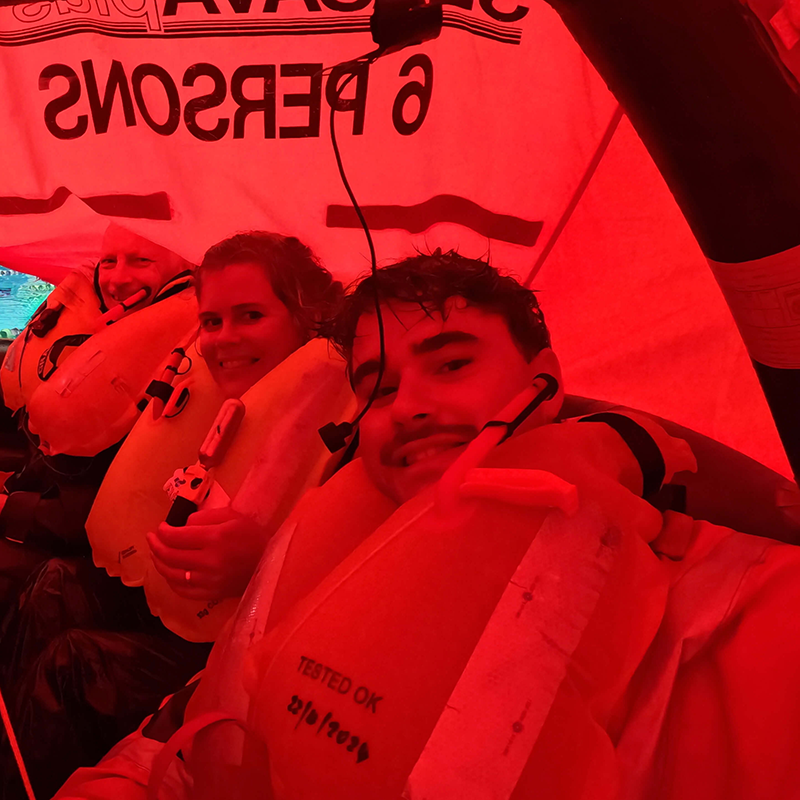
Before this trip, I’d also completed an Offshore Personal Safety course, which made me stop and think much more seriously about the gear you wear offshore and being prepared for when things go wrong — and how quickly your decision-making can unravel when you’re fatigued, wet and cold. I wrote more about that course here: How Ready Are You Really For Offshore?
Which I think about now as I write this — at 3am, in a southerly cross swell as the rain pours down. Because I’m still warm and cosy. And that comes down to wearing the Henri-Lloyd Ocean Pro gear.
Henri-Lloyd sent me their women’s Ocean Pro jacket and hi-fit salopettes to test for the trip north. Leaving New Zealand we had rain, squalls, big waves, and long cold hours on overnight watch.
Which was exactly why I was keen to find out how good this offshore gear really is.
Offshore Gear That’s Flexible and Durable — As You Would Expect. But Better.
It’s can be hard to tell if you buy something online what it’s actually going to be like when you get it. Pulling the Ocean Pro gear out of it’s packaging — honestly I was so stoked. The gear feels really durable to touch but it doesn’t weigh a ton, and it’s clearly well constructed with all its internal sealing systems, fully taped seams, YKK Aquaseal zips and reinforced Cordura panels (flexible reinforcement on the knees and seat).
This gear is designed to survive years offshore instead of just a couple of seasons.
And honestly, the first thing I noticed was how good it felt to put on. The 4-layer hybrid fabric has a surprisingly soft feel for something built for sustained offshore exposure.
Sizing
For reference, I’m 172cm tall and wearing size XL for the Ocean Pro set.
The fit is excellent, especially noticeable moving around the cockpit. I can squat and stretch and two days into the trip I’m grateful for how flexible the fabric is. I never felt restricted or uncomfortable even over my base and mid-layers.
The salopettes are a touch long in the legs but not enough to bother me since I can adjust the cuff adjustors on the bottom of the pants so they don’t hang down.
One of the complaints I hear about offshore gear is that it’s heavier and starts feeling stiff and exhausting, but the Ocean Pro setup felt noticeably light. Henri-Lloyd says it’s around 18% lighter overall, which I can believe because usually I’m the first to ditch my jacket but I was happy to keep it on while in the cockpit. It’s still offshore gear — you’re not exactly lounging around in activewear but it’s noticeably easier to move in than other heavy-weather gear I’ve worn.
There’s much to be said for gear specifically designed with articulated ergonomic cut and also designing the women’s fit around wearing a PFD.
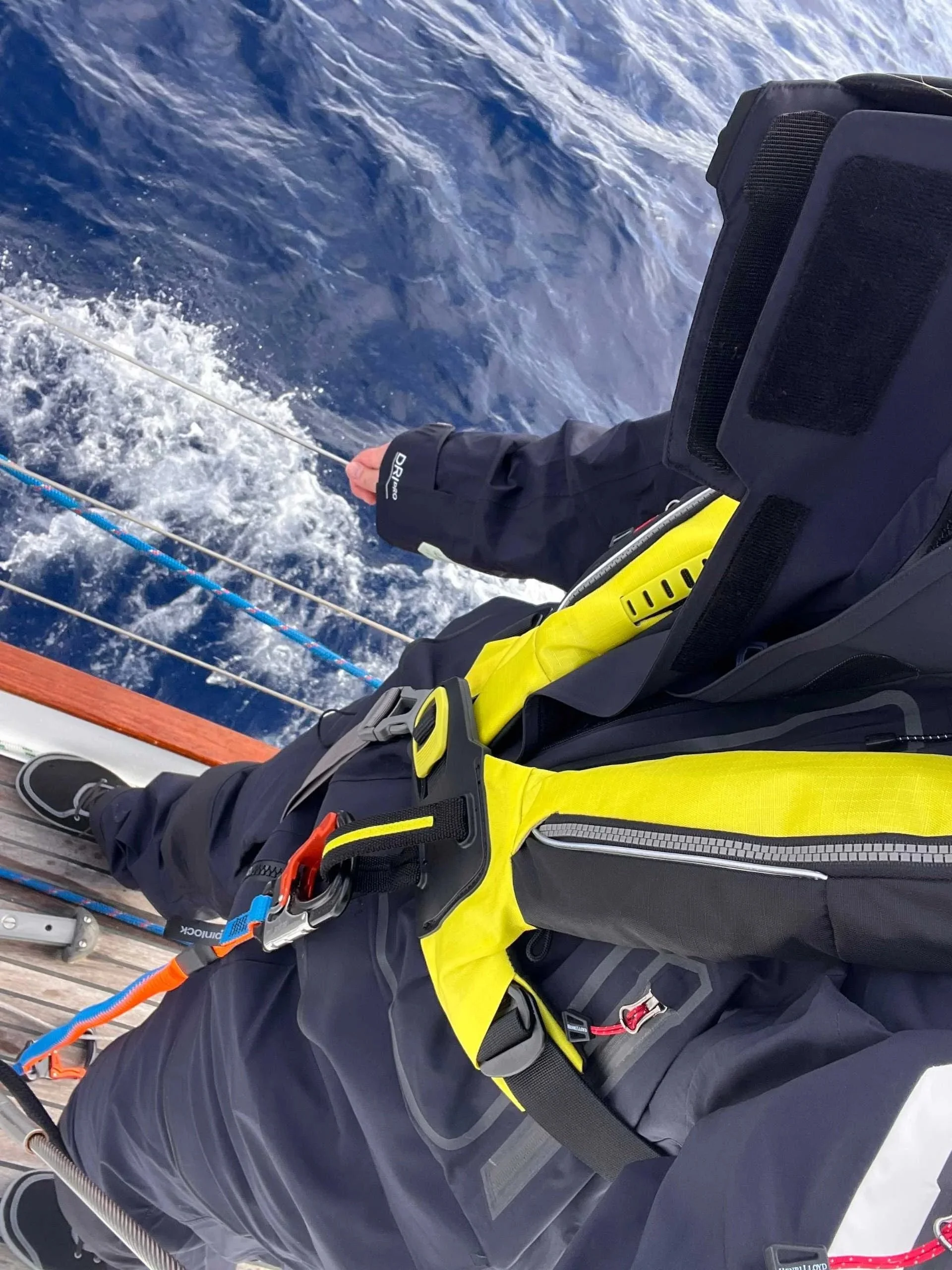
The women’s jacket cut is comfortable with a PFD on for long-periods offshore
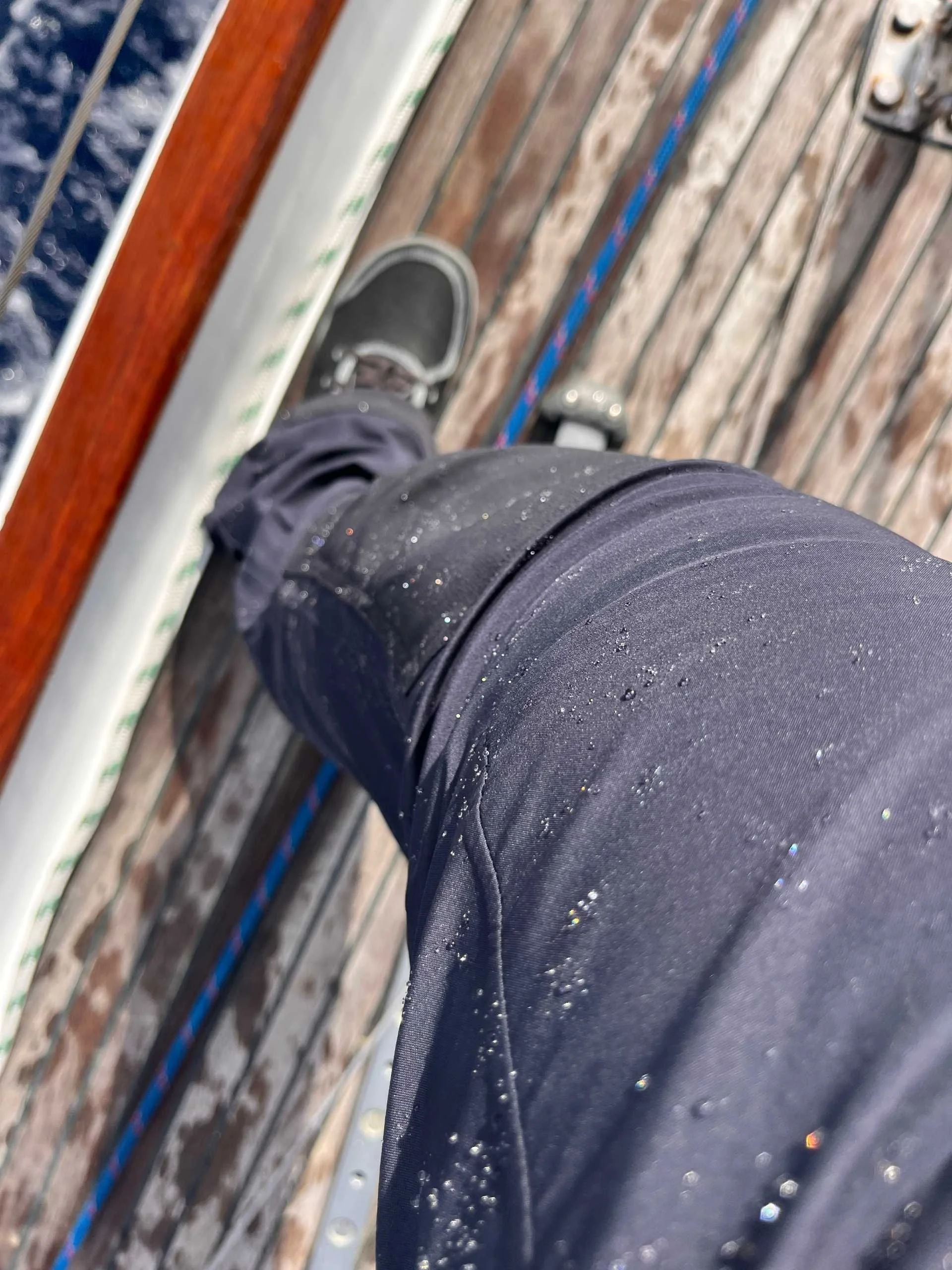
While I wasn’t drenched in saltwater on this trip (but plenty of rain) — I can see how Henri-Lloyd rates the Ocean Pro with a 35,000mm waterproof membrane
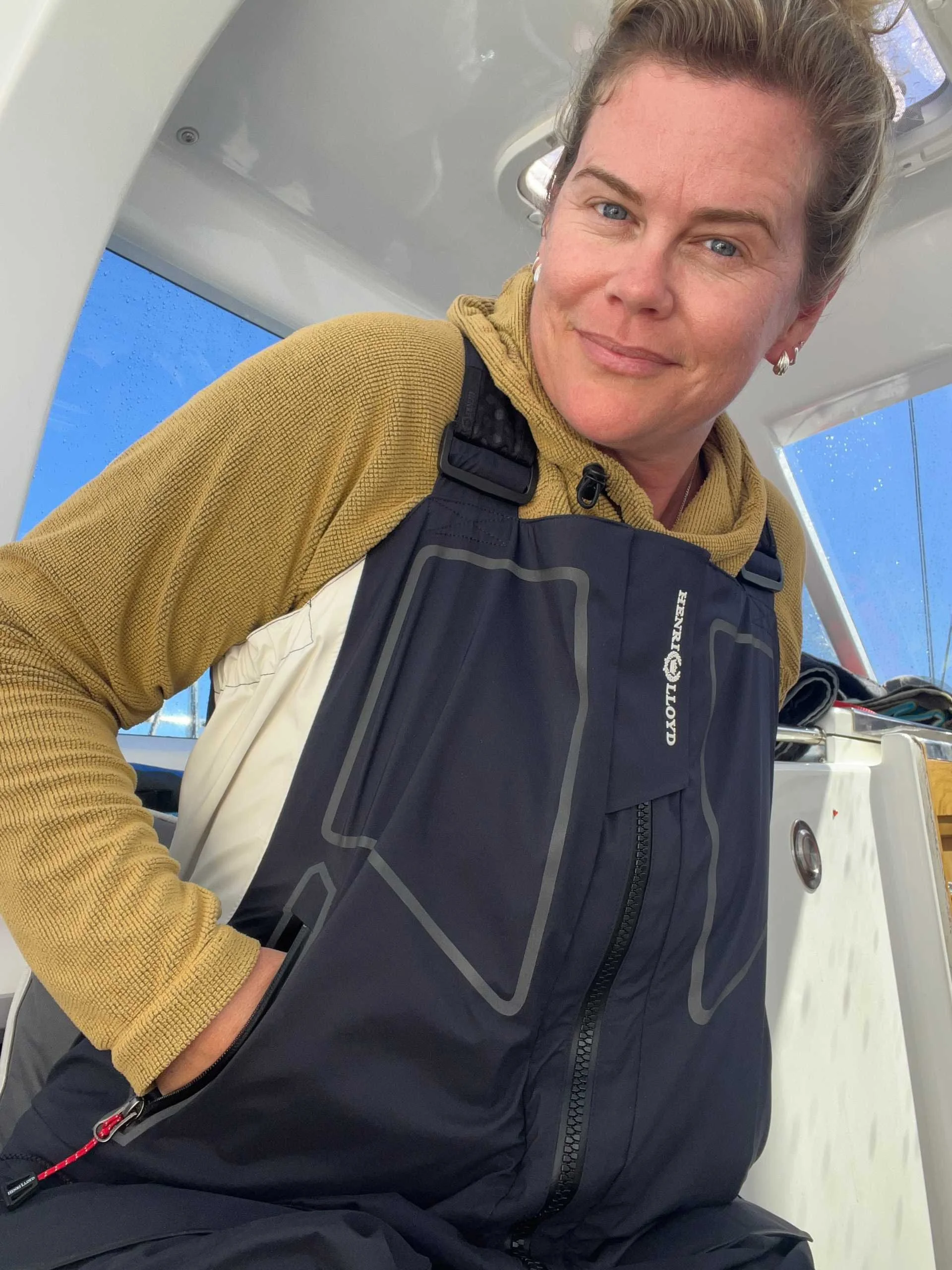
Easy access pockets in the salopettes, which were comfy to lounge in while on watch
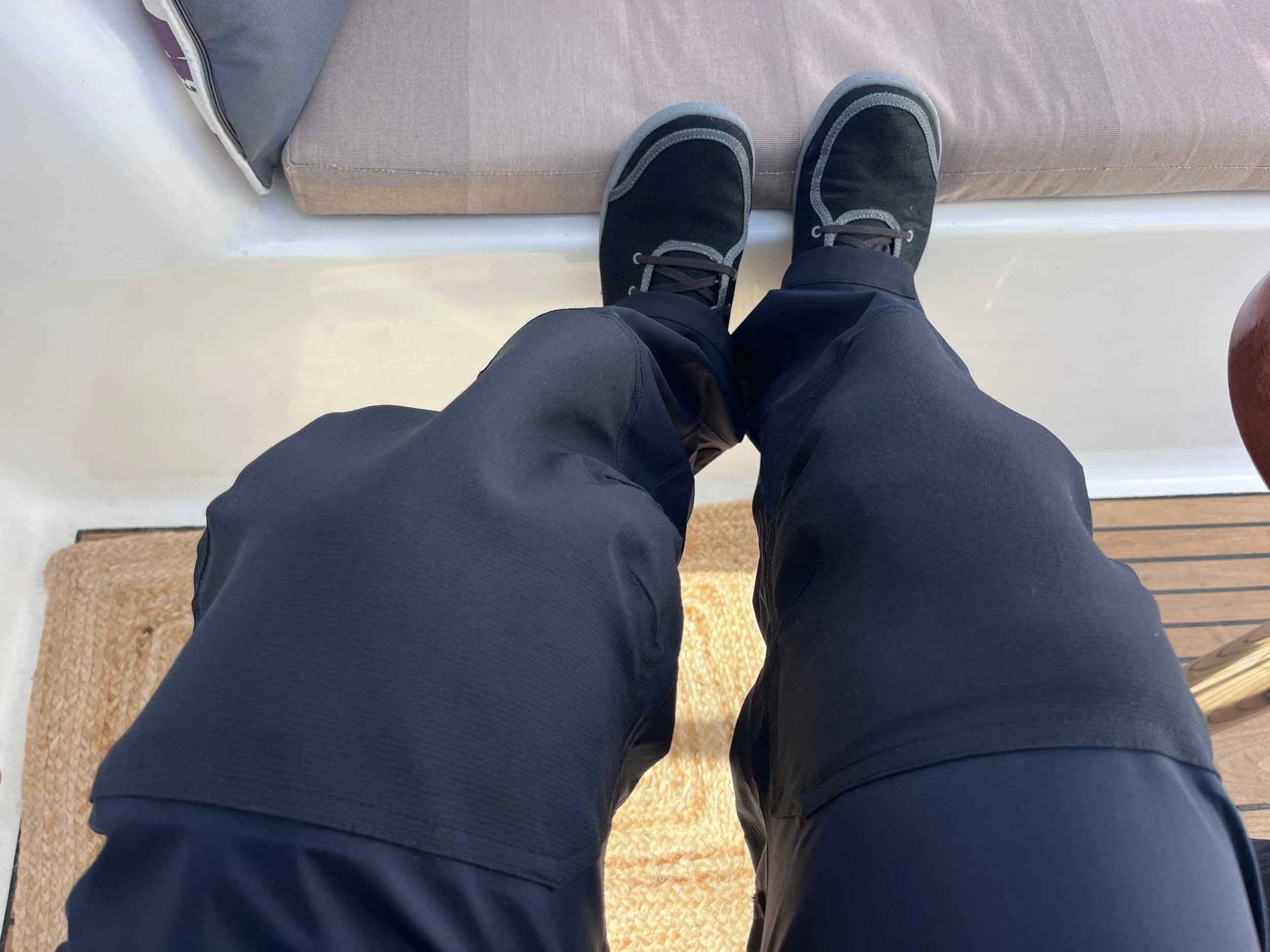
2mm EVA foam in the knee pads (and seat) which is super comfy
Designed for Women — Actually
They haven’t just shrunk men’s gear and hoped for the best. There are some genuine design considerations for a woman’s shape, and features that make life much easier onboard.
The women’s fit genuinely feels designed around actually wearing a PFD and harness all day. I noticed the pockets sit lower and stay accessible instead of disappearing underneath layers and straps, which made getting to my 2am mini-Snickers bar sugar hit much easier.
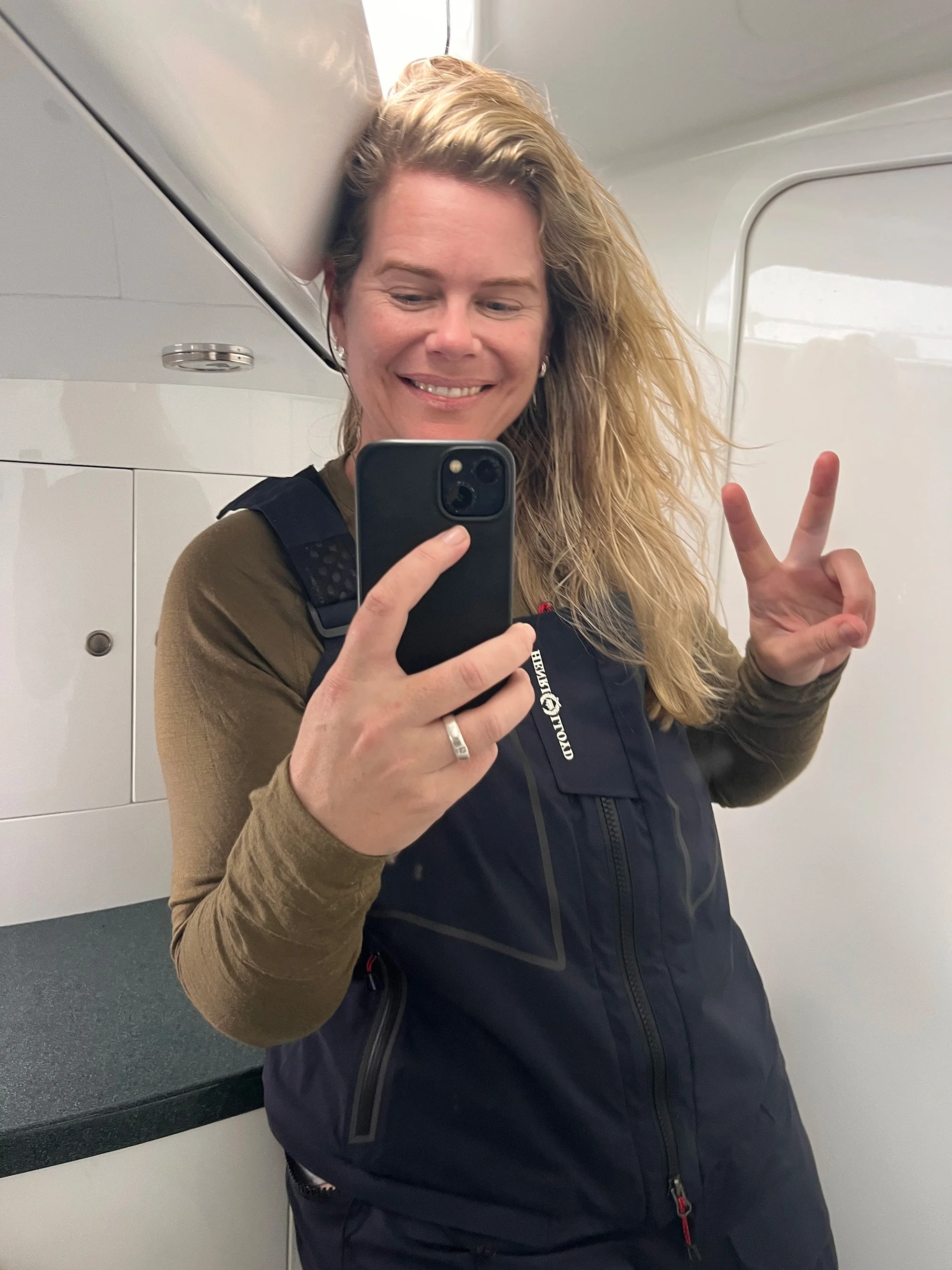
A fuzzy shot in a bouncy visit to the head — unzipping is pretty quick and easy
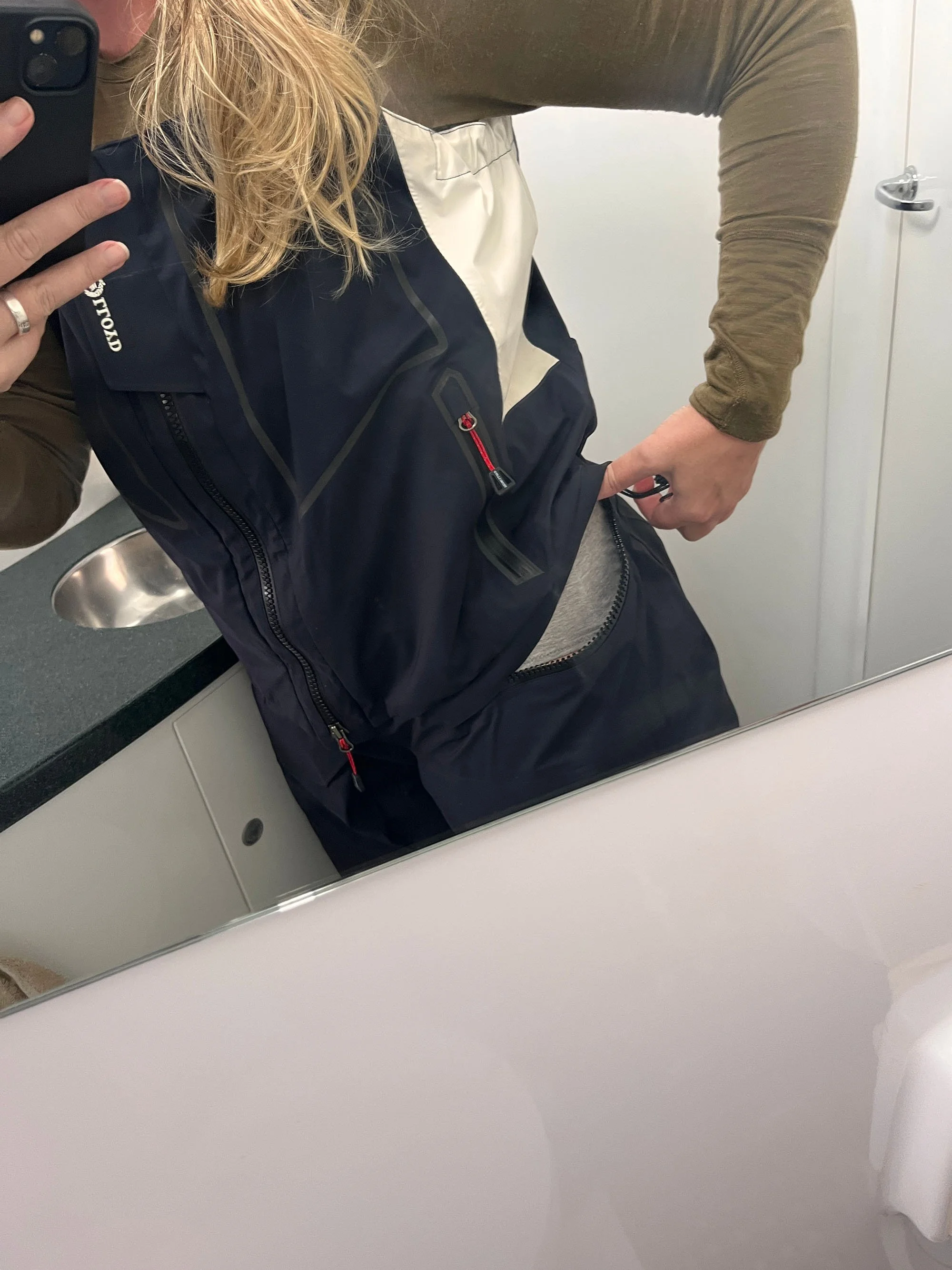
Wedged against the counter — the salopettes drop seat is an easy unzip and rezip with one hand
And then there’s the weeing.
Which is often something I put off as long as possible when I’m dressed in my full kit, until I’m so busting I have to go downstairs. Because going to the toilet is basically a mission of its own. Especially on night-watch. Navigate under red light to the head. Brace in small room against wave smacking boat. Take off PFD. Blind yourself in mirror with headtorch. Remove jacket — loosening cuffs and undoing zips while the boat drops into a trough. Undo salopettes and shuffle them down to knees until you can sit on the loo ready for action. Hallelujah!
I don’t think men fully appreciate how much offshore sailing involves tactical toilet management for women.
The Ocean Pro salopettes are a bladder saviour.
Anything that reduces the amount of time you spend half-undressed in a pitching offshore bathroom is worth every penny.
It meant I drank more water, stayed more hydrated, and reduced fatigue.
Staying Warm and Dry & What I Wore Underneath
After days offshore, I never once had a damp feeling creeping through to my dry layers under the jacket, which honestly surprised me considering how flexible the fabric feels. Henri-Lloyd rates the Ocean Pro with a 35,000mm waterproof membrane, but more importantly offshore, it actually stayed dry in sustained spray and cold night watches.
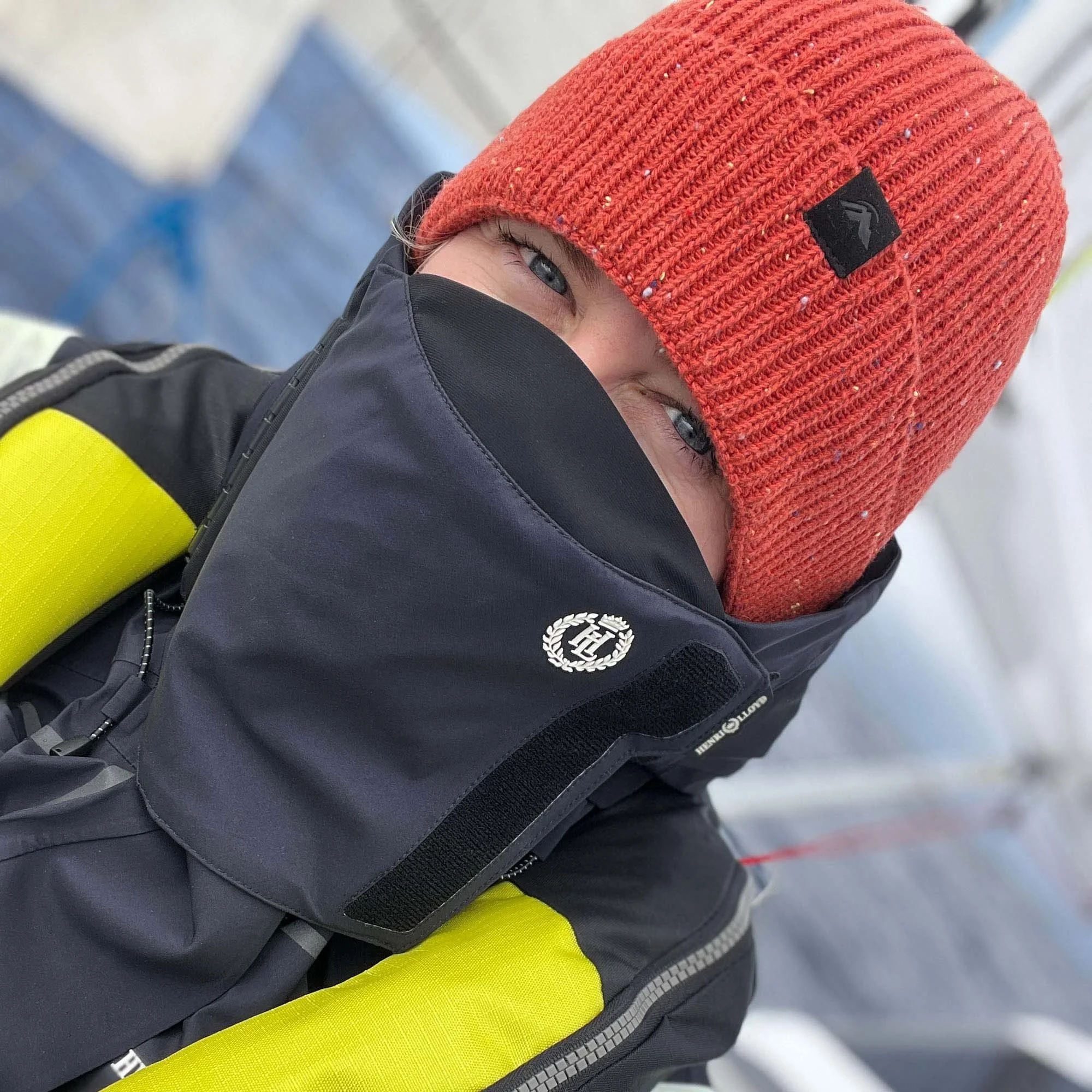
The removable neoprene inner storm skirt is a great feature which I would appreciate more if the cockpit was more exposed, or if I was spending longer periods of time on deck changing sails.
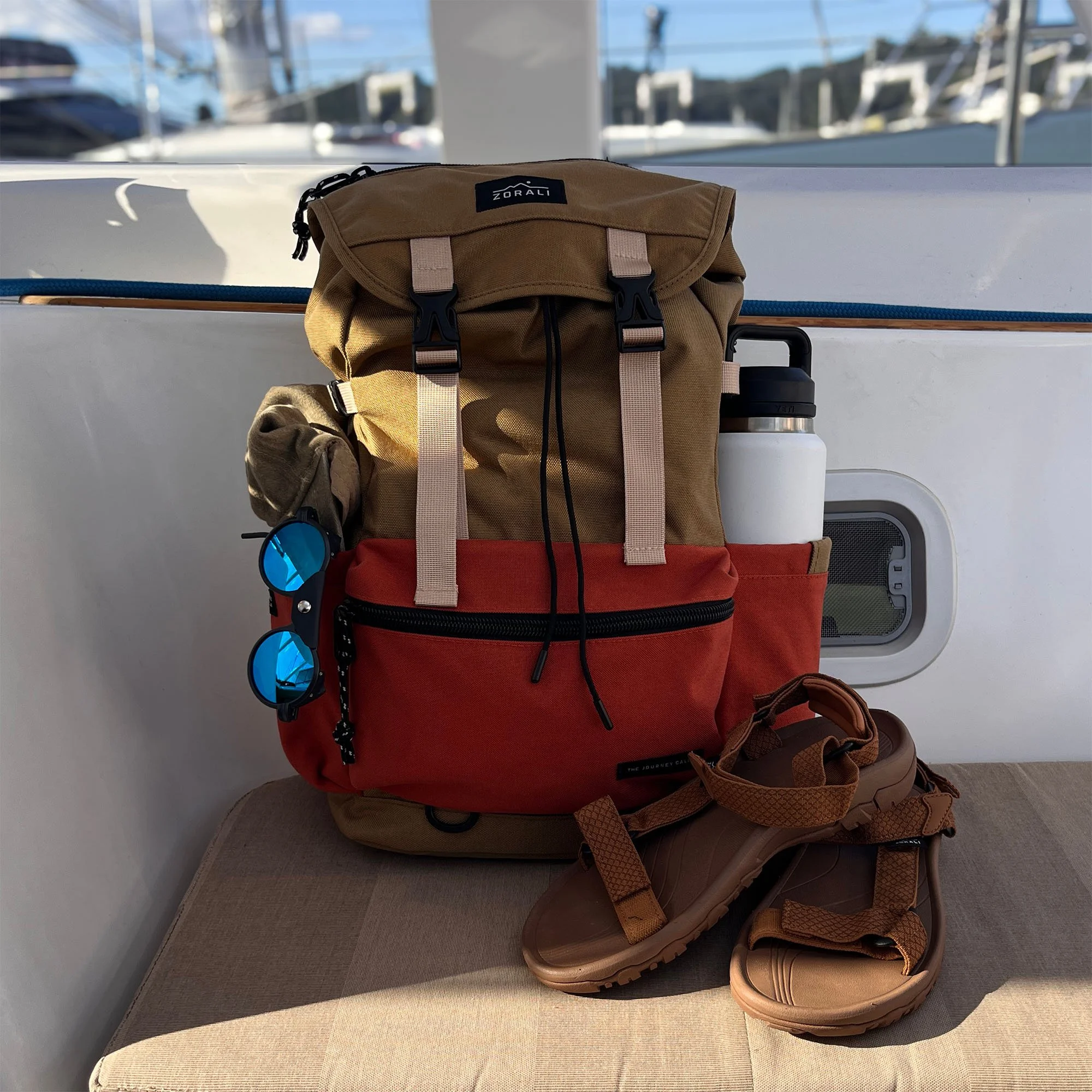
On colder watches I layered a merino top, fleece, neck gaiter and outer shell, which gave me enough flexibility to add or remove warmth without getting clammy. I’ve written more about that exact setup in My Super Cosy Layers for Sailing: The Zorali Combo.
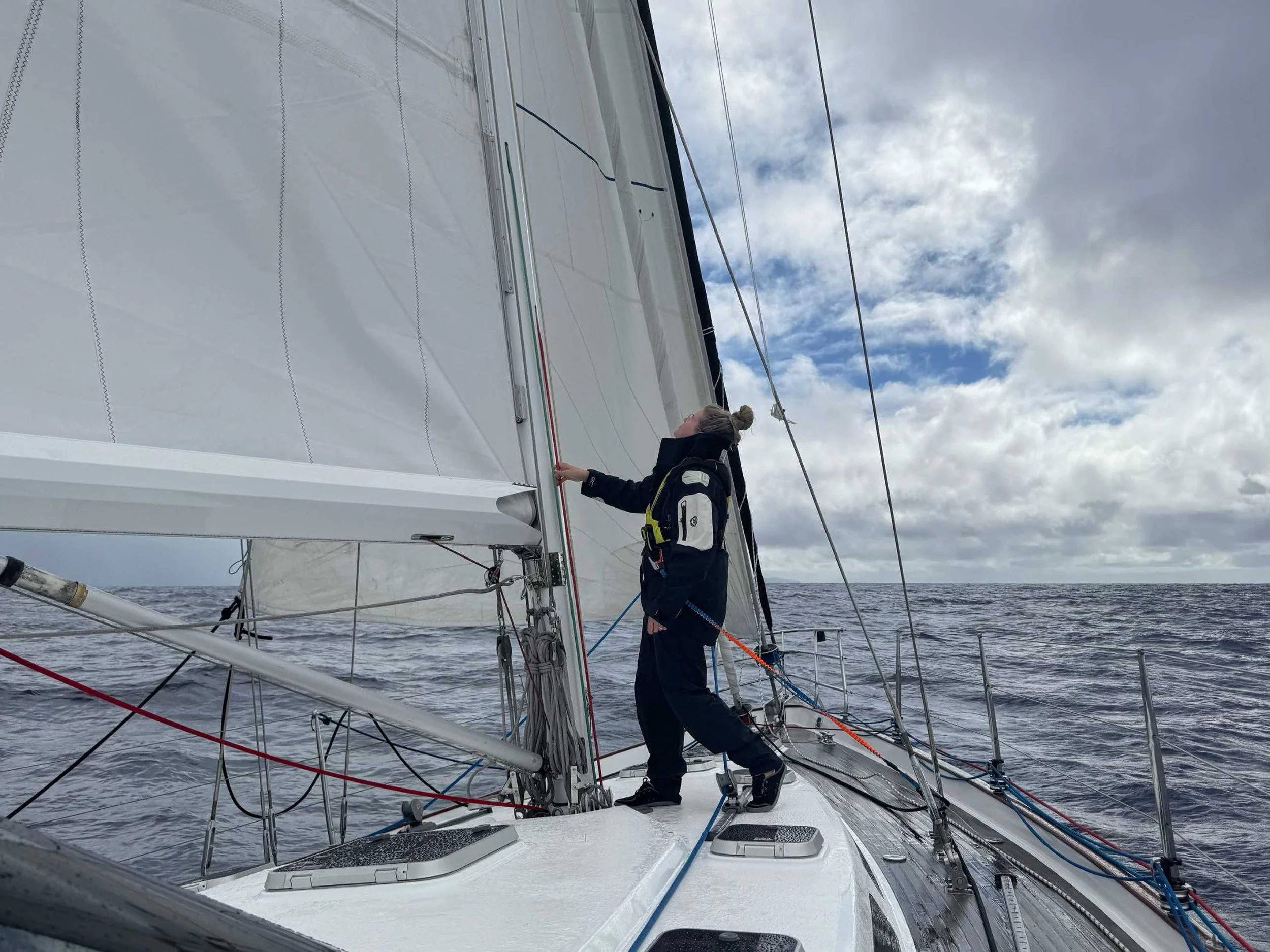
S 31.273397° E 176.039042° Cold southerly temps and rain out of New Zealand
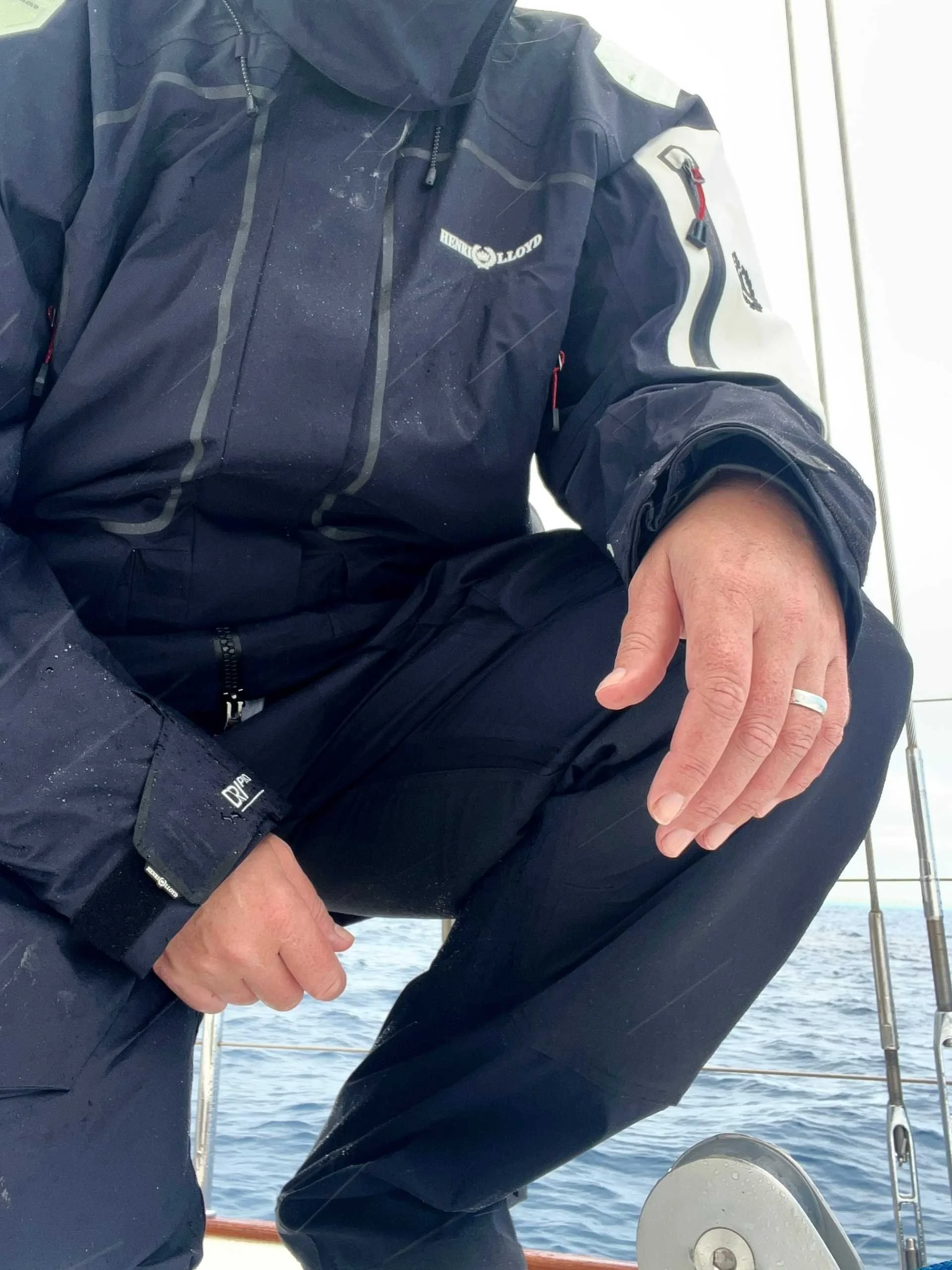
This gear loves a squall
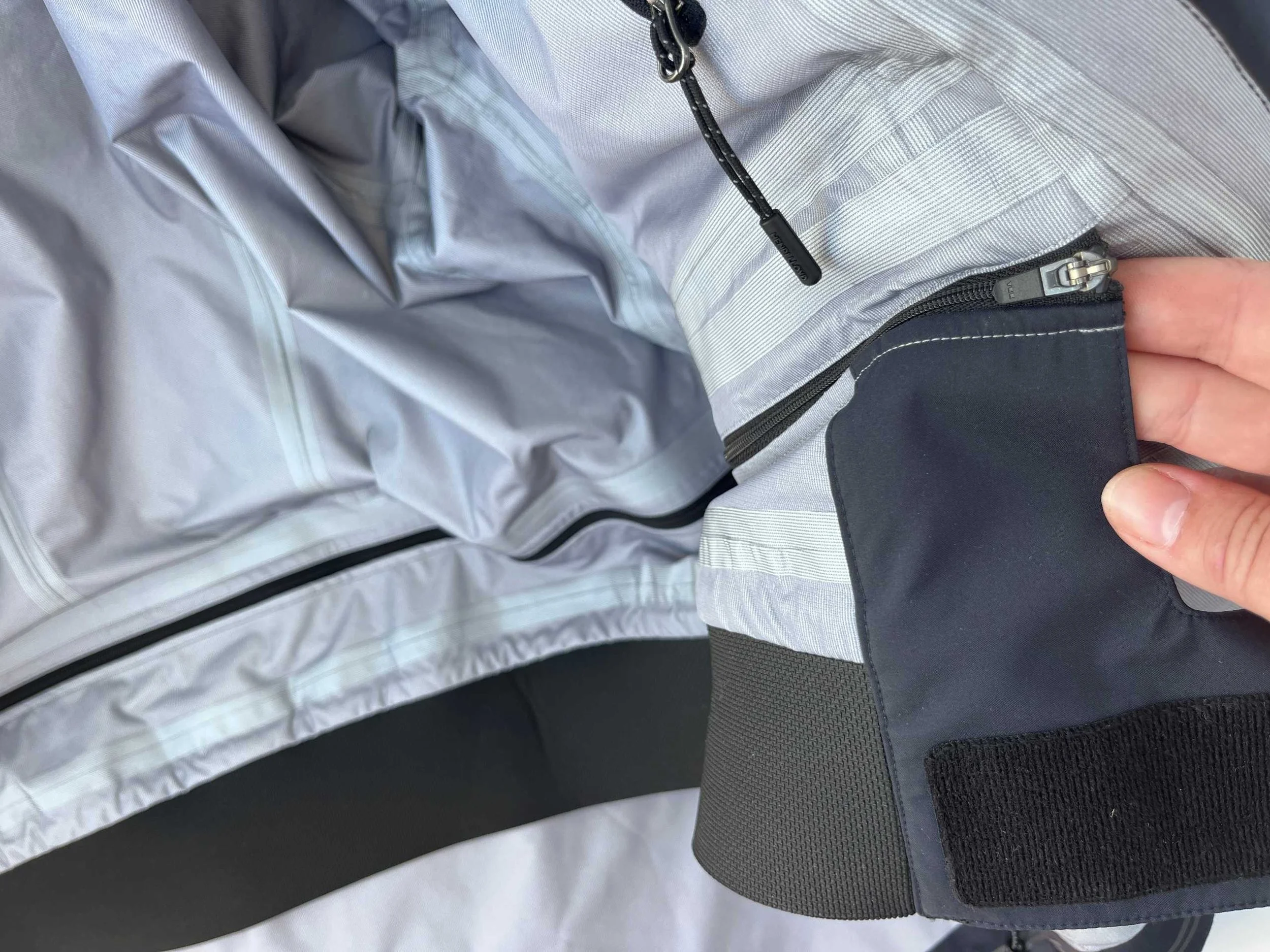
A closer look at the removable neoprene inner storm skirt
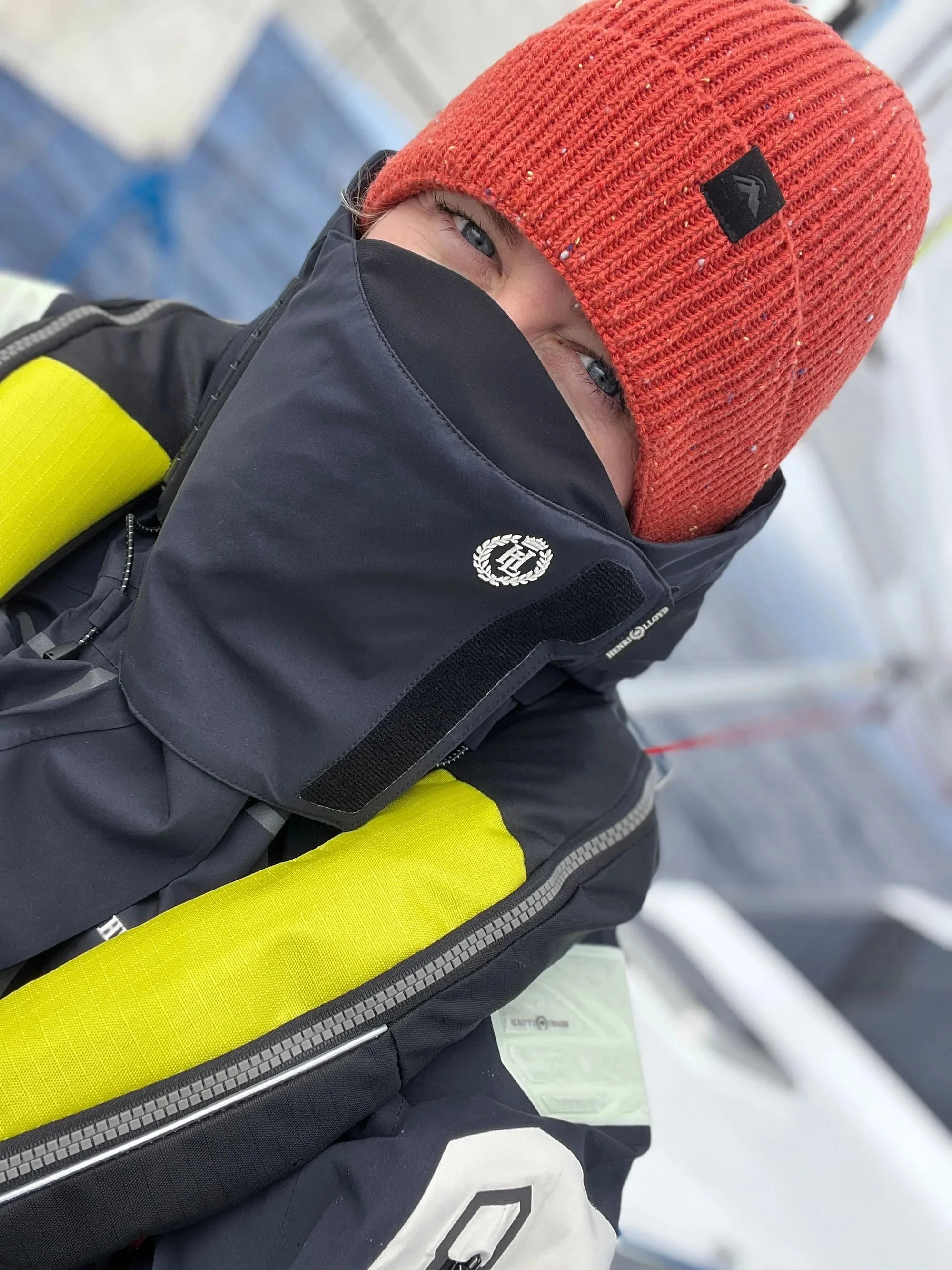
The Best Collar
The lining around the neck is ridiculously soft. Which might seem like a weird thing to appreciate but if you’ve spent any length of time in wet weather gear, you’ll know that everything seems to try and sneak down your back: wind, water drops, pelting rain…and over time feeling wet and chaffed isn’t fun. So it was really nice to actually have this cocoon of neck warmth when it was cold. And there’s a hinged flap with a soft piece to keep your nose warm too.
That’s just one of the details you might not think too much about while trying it on in-store for five minutes.
But you definitely notice it offshore.
Small Details that Make a Difference
And the more I wore the Ocean Pro gear, the more I started noticing small details throughout it that felt genuinely well considered (Matteo, Head of Design at Henri-Lloyd talks about this in detail).
The internal storm cuffs help prevent water working its way up underneath the jacket — super helpful when you’re working in the rain.
The pockets have an extra fold-over section inside them which stopped my phone and earphones slowly getting damp.
And the velcro. As someone who wears a lot of wool onboard it’s frustrating when velcro snags and pills my jumper (and leaves bits of wool in the velcro that I have to try and pick out). So I definitely noticed when the low-profile hook-and-loop closures on the Ocean Pro Jacket didn’t aggressively try and wax me!
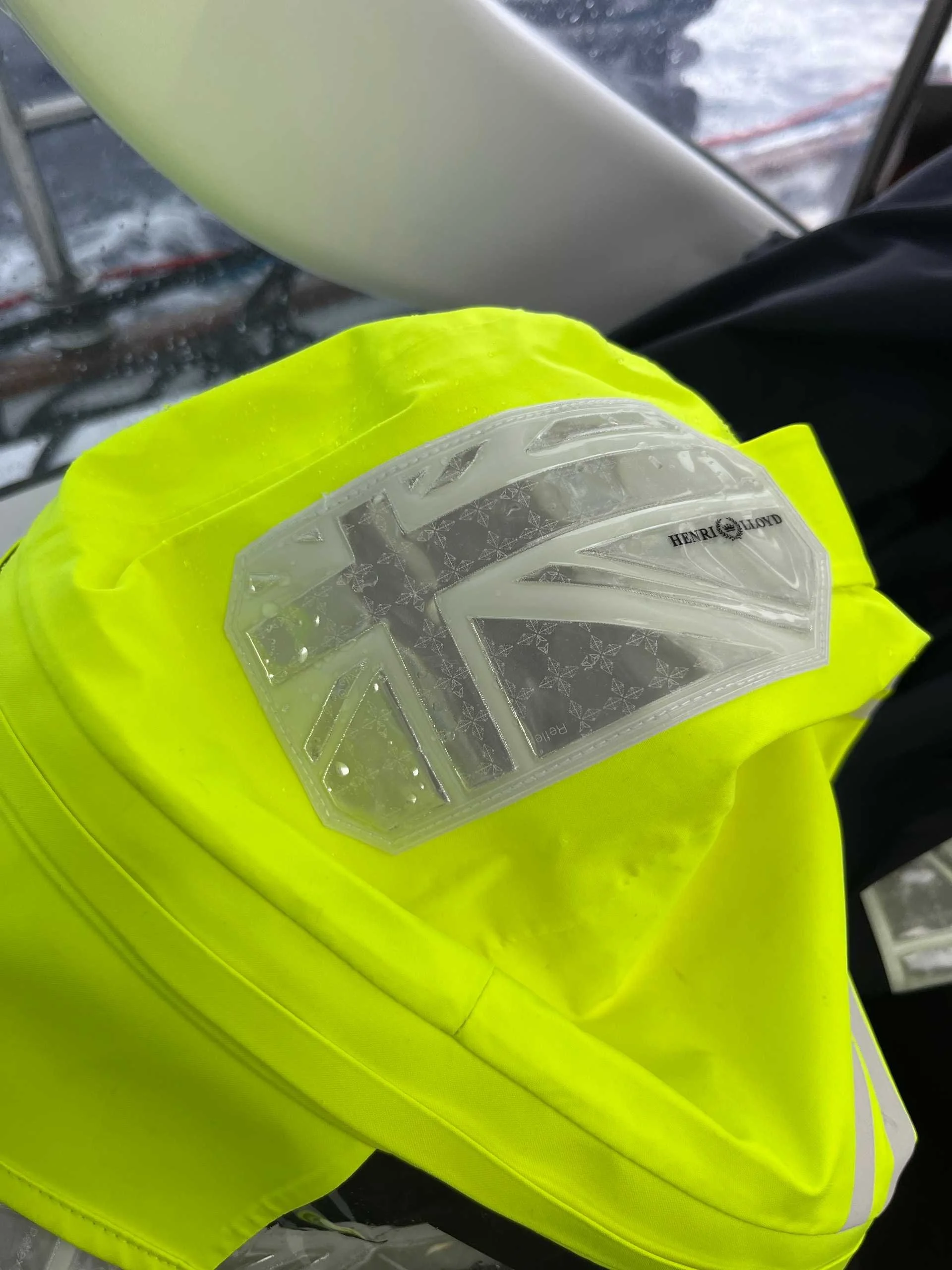
Reflector patch on the spray hood by day
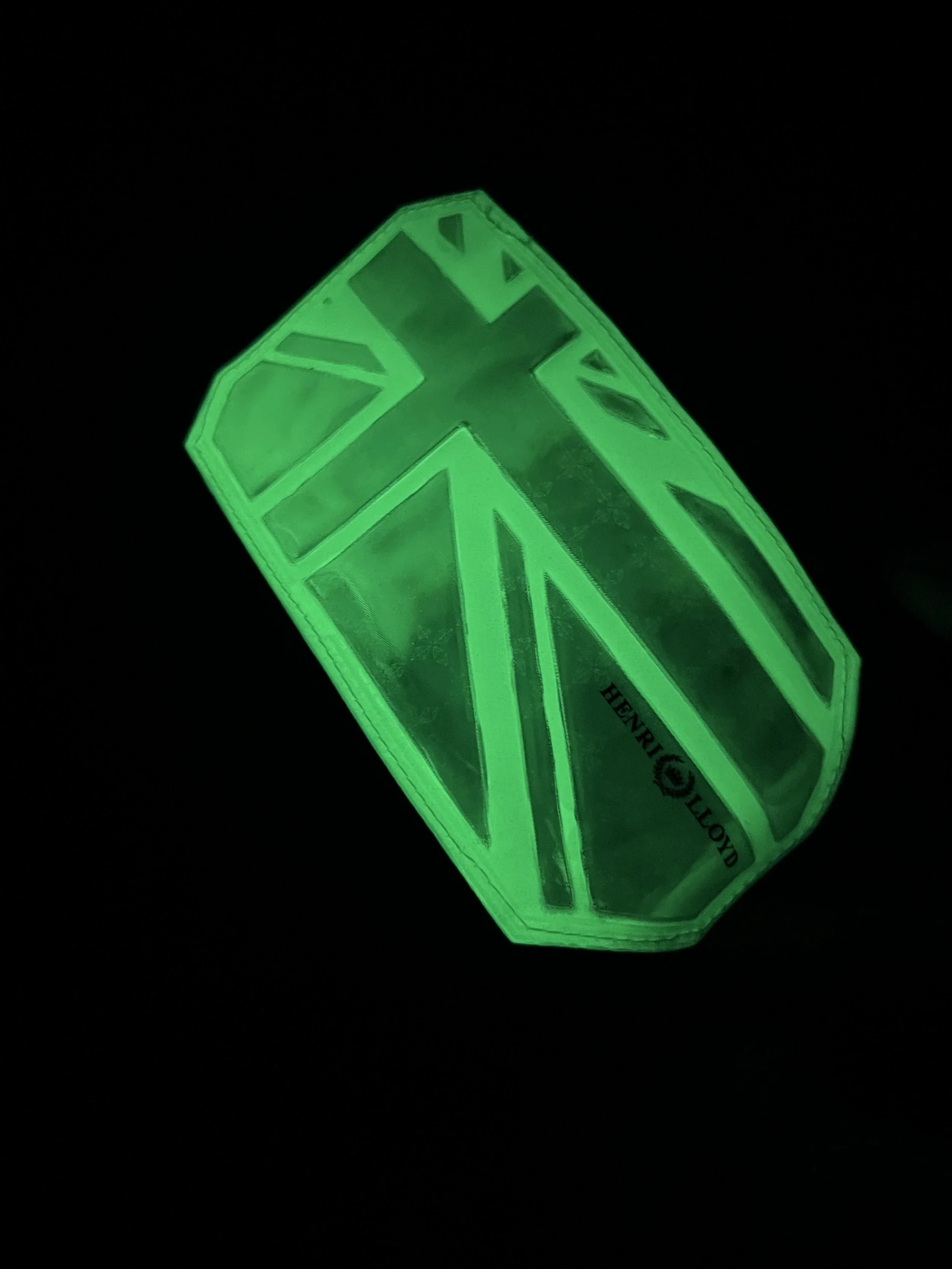
Reflector patch illuminated at night
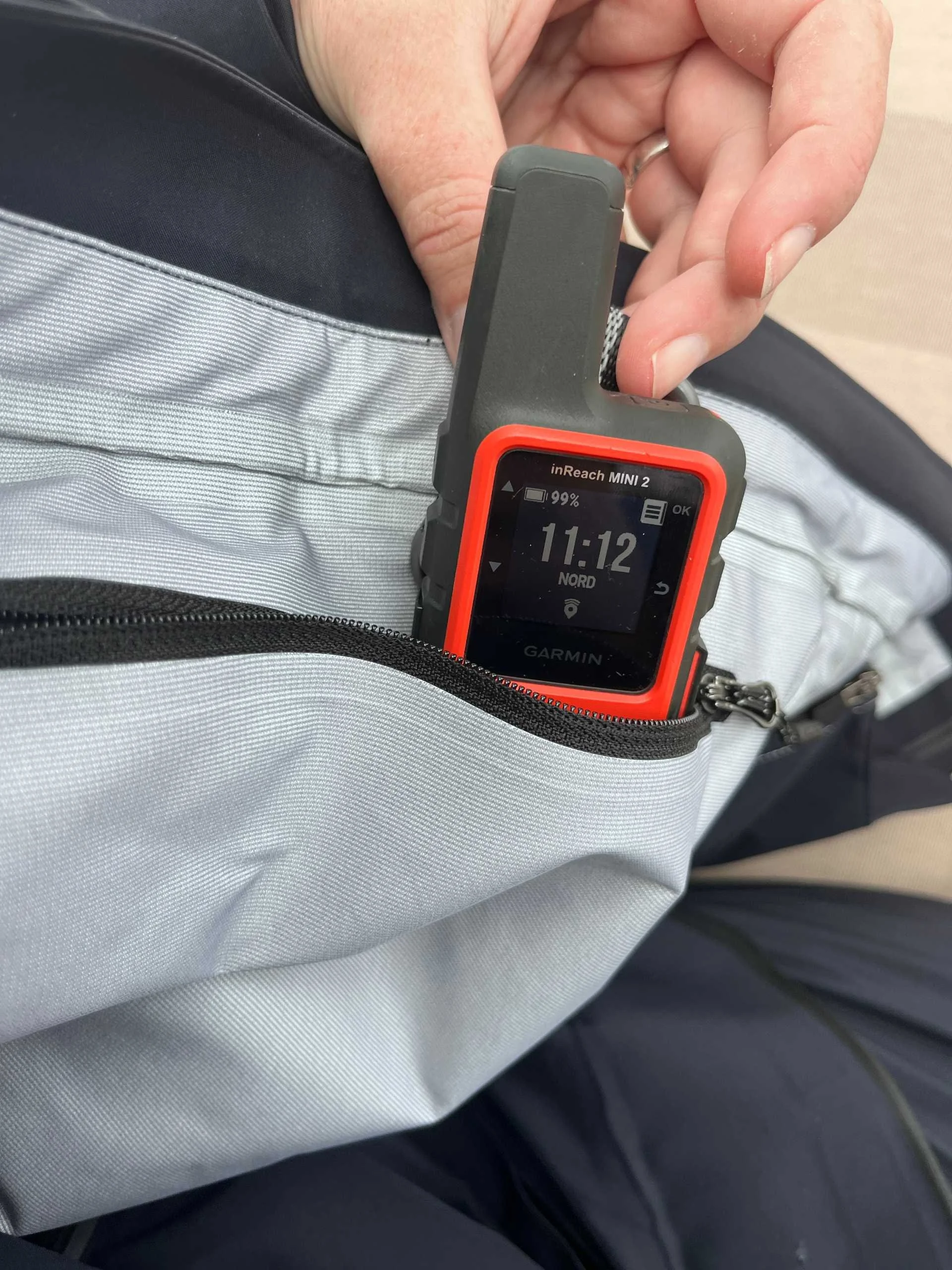
Internal jacket pocket keeps my Garmin inReach close-by, protected and warm (helps extend the battery life)
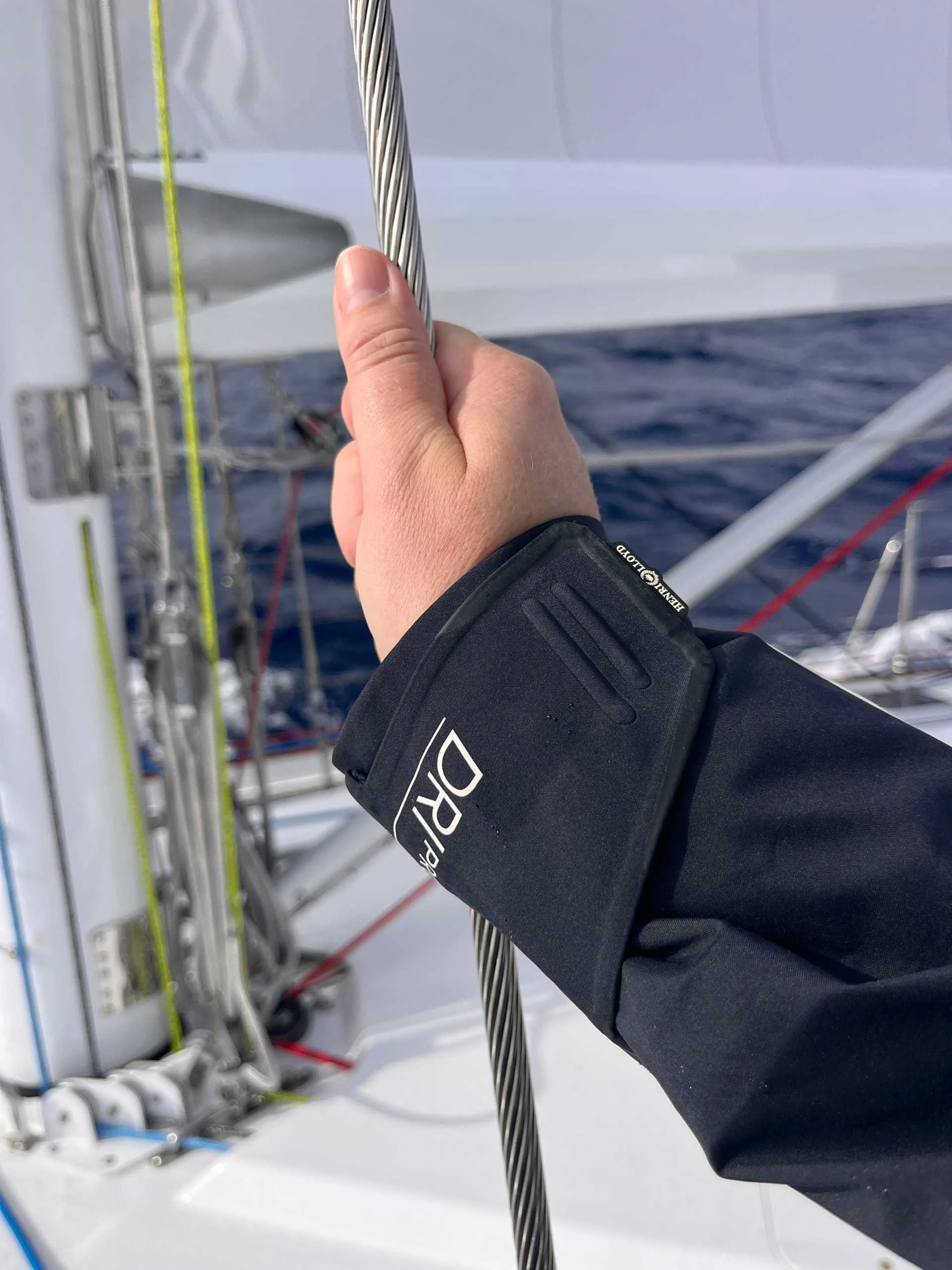
Easy adjustable jacket cuffs
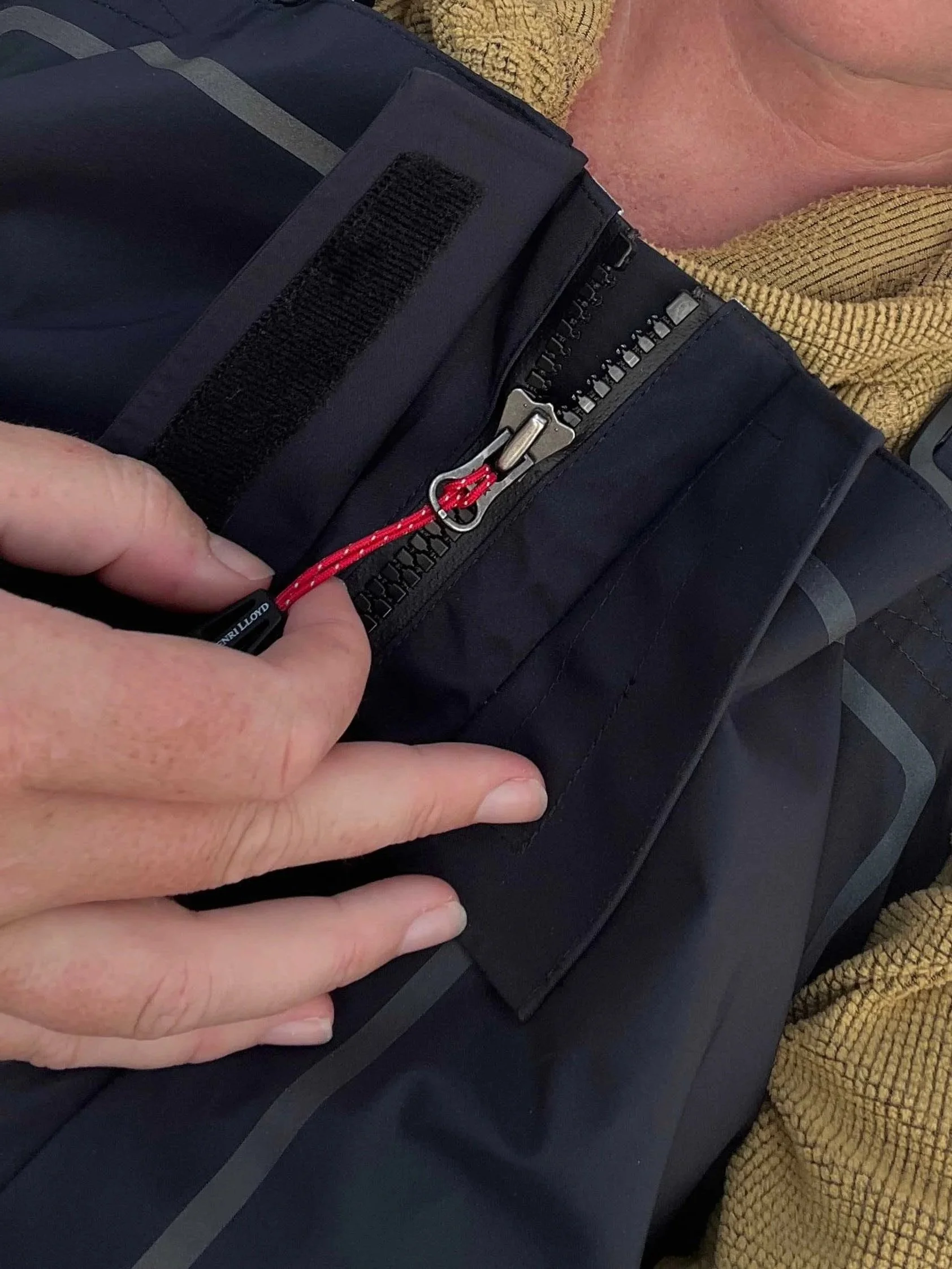
Heavy-duty Aquaseal waterproof YKK zippers — smooth with no catching
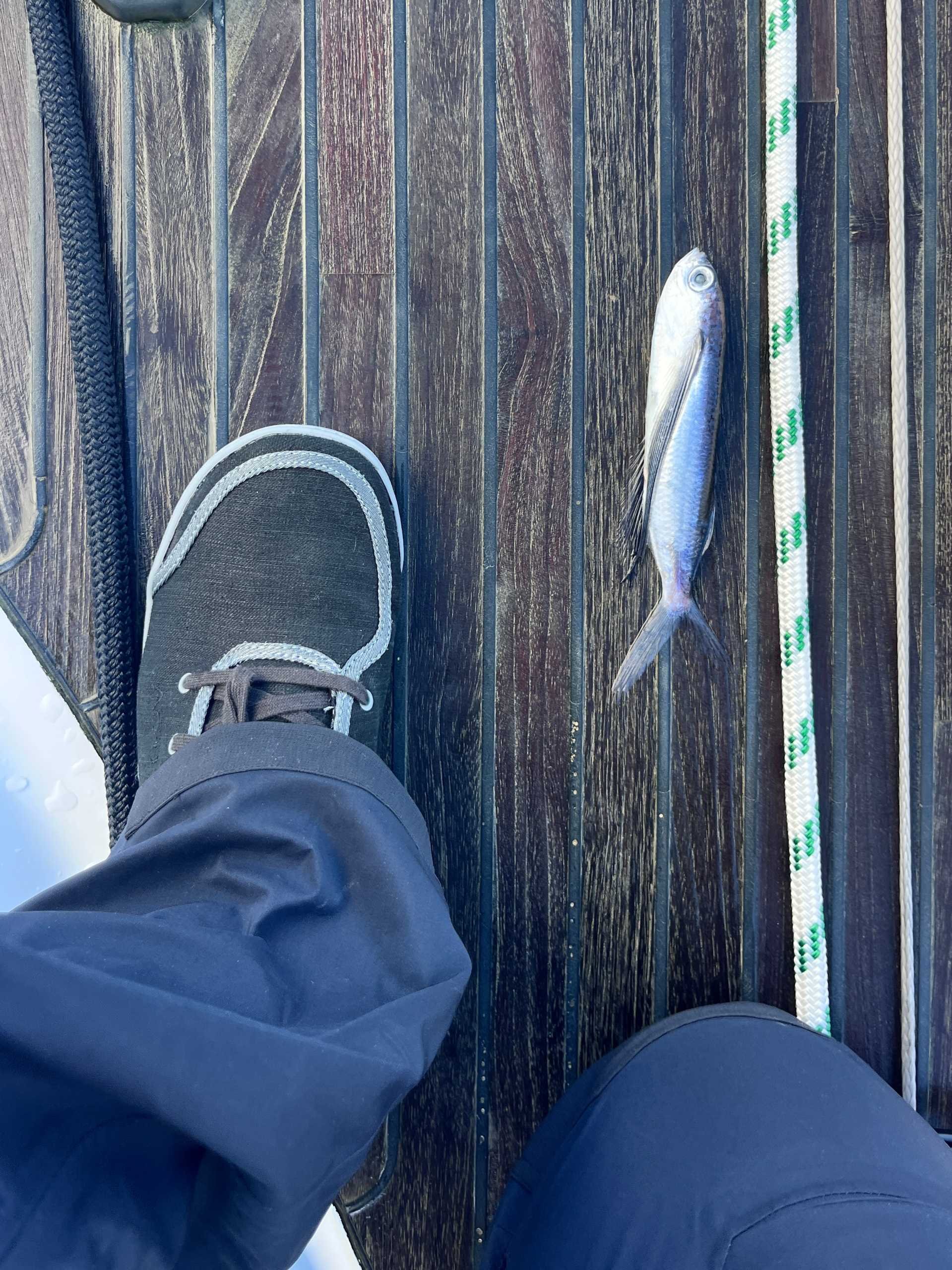
The reinforced pads makes it easier on the knees for regular boat (and hitchhiker) inspections
What Stood Out Offshore
Flexible enough for active sailing and long cockpit watches offshore
Very soft high-neck lining during cold overnight watches
Internal storm cuff and protected pocket system kept spray and water out well
Waterproof zips felt heavily sealed and durable
Relief zip in the women’s salopettes made offshore life dramatically easier
Reinforced knee and seat padding added comfort without feeling bulky
Non-snag cuff closures didn’t destroy merino layers
Overall construction feels extremely durable and built for long-term offshore use
Plenty of adjustments to keep the hood on (good size if you’ve got your hair up too)
Henri-Lloyd rates the Ocean Pro with a 35,000mm waterproof membrane — extremely high protection
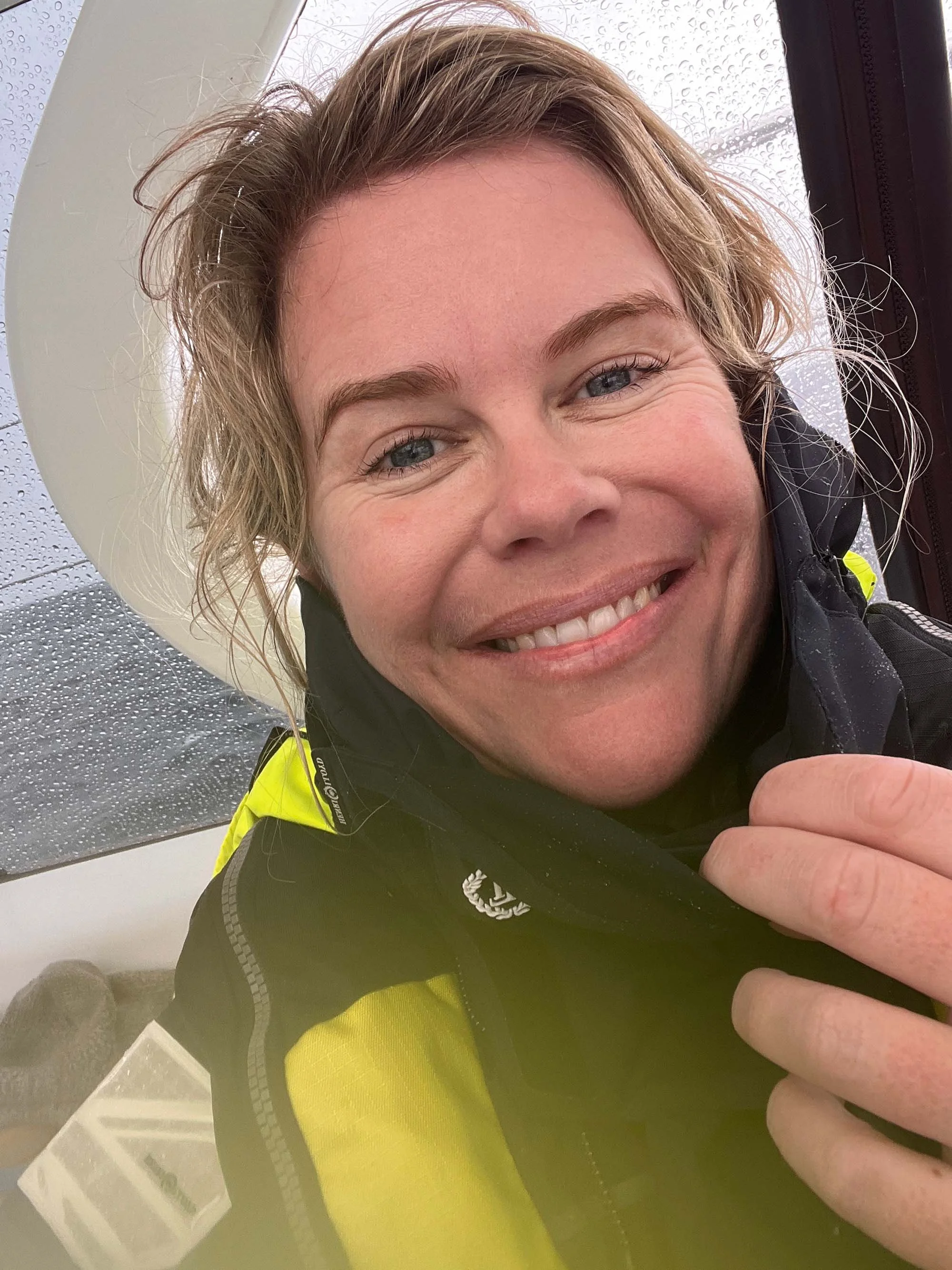
Still warm and dry post-squall on deck
In Summary
North East of New Zealand, sitting out another cold night watch with 4m waves sending spray across the cockpit, I pondered on what a difference having the right gear makes to how much you enjoy a trip. While forecasting has improved a lot, you don’t get to choose what actually happens offshore — only how prepared you are for the conditions.
Turns out that offshore there is a pretty big difference between using coastal gear to get by and using gear specifically designed to last in offshore sailing.
For performance, comfort and survival? Offshore gear like Henri-Lloyds Ocean Pro set is essential. And annoyingly the price tag is worth it.
While Henri-Lloyd supplied the Ocean Pro women’s jacket and salopettes for testing during this offshore passage, you’ll always get my honest appraisal of gear.
Did you enjoy this article? Share it online and read more on the Journal…