My Super Cosy Layers for Sailing: The Zorali Combo

Saltwater Journal is reader supported.
When you buy through our links we may earn an affiliate commission (at no extra cost to you)
A soft merino base layer, lightweight fleece and warm synthetic jacket make a surprisingly good comfort system onboard — especially for cold starts, changing weather, and typical sailing days where you’re hot and cold within the same hour.
You leave the dock comfortable in a tee. Thirty minutes later the wind chill hits and you’re freezing so you throw all your gear on. Then you go below to sort lunch with all the hatches closed and it’s stifling and suddenly you’re too hot. Then you come back up to the wind (passing up ham sammies for the crew) and it feels like it’s 50 degrees colder than before. Sailing is like a perimenopause that everyone can experience.
When you’re outdoors a lot sailing and mucking around with boats, wearing the right clothing layers matters.
But don’t be caught out thinking you have to buy your sailing clothes only from marine brands; some of the best layers come from outdoor adventure companies.
Some of my favourite layers that I wear onboard are not sailing-specific clothes at all! So now’s the time to share these super cosy layers from Zorali. Tried and tested over years onboard — it’s a pretty fail safe system to keep you feeling good, no matter what you’re up to.
Use Your Outdoor Clothes for Sailing

We love outdoor gear we can wear up a mountain or on the boat
Some of the best layers you can wear onboard are the outdoor pieces you may already have in your wardrobe: merino tops, hiking fleeces, warm synthetic jackets, rain shells, wool jerseys, hoodies, and the sort of clothes designed for damp mornings, changing weather, movement, sweat, cold, and sitting around eating a questionable squashed lunch in the wind.
Yes there are terrific marine brands with sailing specific apparel, but I’m a massive advocate for minimalist wardrobes and multi-purpose items you can take from sea to bush to city.
Of course, if it’s pouring with rain or you know you’re in for ocean spray and splash, you’ll still need a good coastal jacket or proper wet weather gear when conditions call for it.
The difference is that marine layers are designed around heavy weather protection, visibility, saltwater exposure and technical sailing use. Outdoor layers are often ideal for comfort, movement, warmth-to-weight and looking normal once you step off the boat.
The sweet spot is using outdoor layers for the soft base and mid layers, then adding proper sailing outerwear when the weather turns wet.
Controlling Your Temperature Onboard (Seasickness Sucks)

Merino is the best base layer for comfort onboard — and relaxing on passage
A lot of my advice for best sailing clothing focuses on staying warm and dry, which since we’re on a boat — is a pretty big deal.
But comfort matters too. A LOT.
Especially if you’re prone to feeling queasy, tired, or generally a bit off when conditions change. Getting too hot below, then cold again on deck, then sweaty under too many layers, then chilled once you stop moving all adds up. And definitely takes the fun out of sailing.
I’m much less likely to start feeling seasick when I regulate my temperature. So being able to add or remove soft, comfortable layers easily makes a big difference.
This is where outdoor hiking layers work so well for sailing. They’re usually designed for the same mix of conditions: cold starts, movement, wind, damp air, changing temperature, and long active stretches outside.
You can absolutely sail in all sorts of clothing combinations. I’ve worn double merino and a wool jersey. I’ve worn a cotton tee under a hoodie under a rain jacket. I’ve worn whatever was clean, dry-ish, and the closest thing to grab.
But the Zorali combination coming up is the one I keep going back to because it gets my comfort level and temperature right again and again.
The 3 Goldilocks Sailing Layers: Just Right
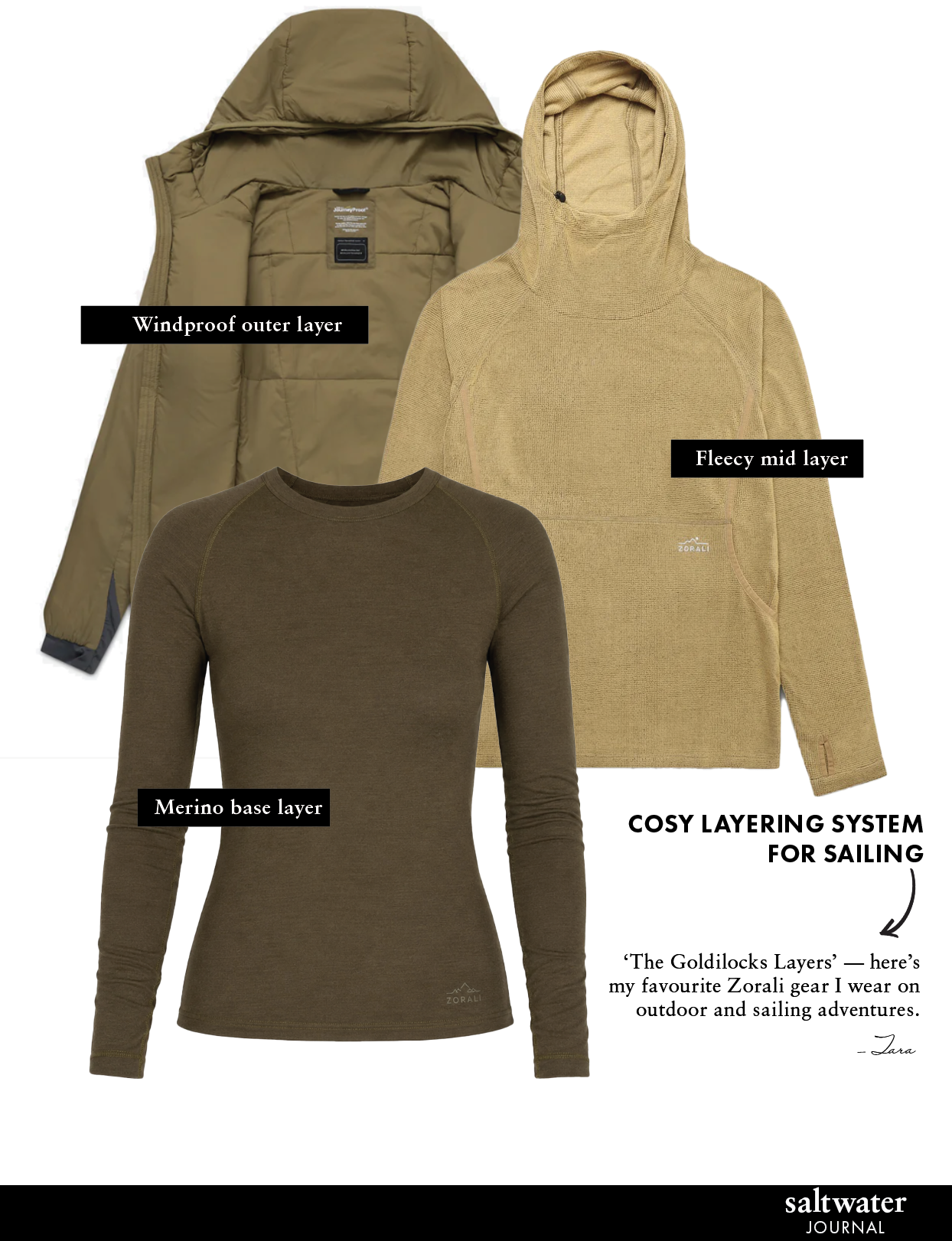
There are three main layers to keep you feeling not too cold, not too hot — but as lil’ Goldi said: “Just right”
These are:
a soft merino base layer
a light but warm fleece mid layer
an insulated windproof jacket outer layer
Over the past few years, I’ve built this layering combination from Zorali (an epic Aussie outdoor company with a sustainability focus), and I swear by it. Tested in New Zealand sailing conditions with temperatures anywhere from 6°C to 24°C, plus windchill.
Zorali Merino Base Layer
A soft and cosy base layer — with no itchy tag
A good breathable base layer is essential to keep your core warm and wick away your sweat.
I love wearing merino on the boat for so many reasons — but essentially it breathes well, it’s naturally odour resistant, and it tends to feel nicer against the skin than a lot of synthetic thermals. Outdoor safety guidance generally recommends wool or synthetic layers over cotton for cold, damp conditions, because they stay warm they they get wet. #GoTheSheep!
A long sleeve merino is really good for sun protection, and when the temperature drops — I often sleep in mine on an overnight passage — they make really good boat PJs! Having a short sleeve to hand is smart for layering in summer months too.
If you buy good quality merino and look after it, it should last. That matters because we’re all enviro conscious consumers here right? (By the way Zorali also publishes an impact report and says it offsets 100% of its carbon, which I think is very cool, and another reason I’m a supporter). Cheap base layers won’t get better over time.
The Zorali Women’s Merino LS Base Layer I have is in Olive, size 16 — I’m really loving the autumn palette at the moment.
It’s thick and soft, and the sleeves are nice and long.
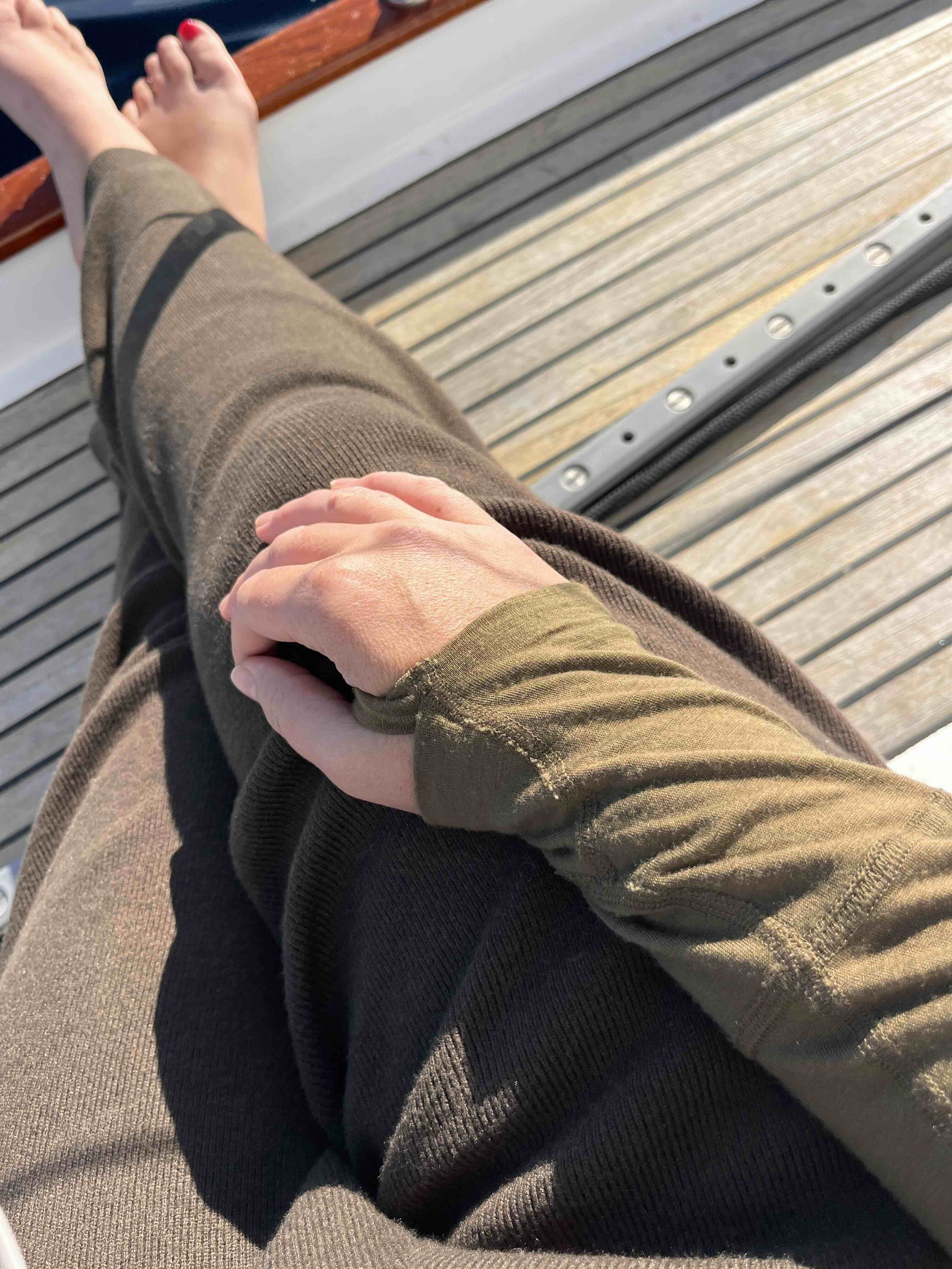
Good stitching all over and soft long sleeve layers
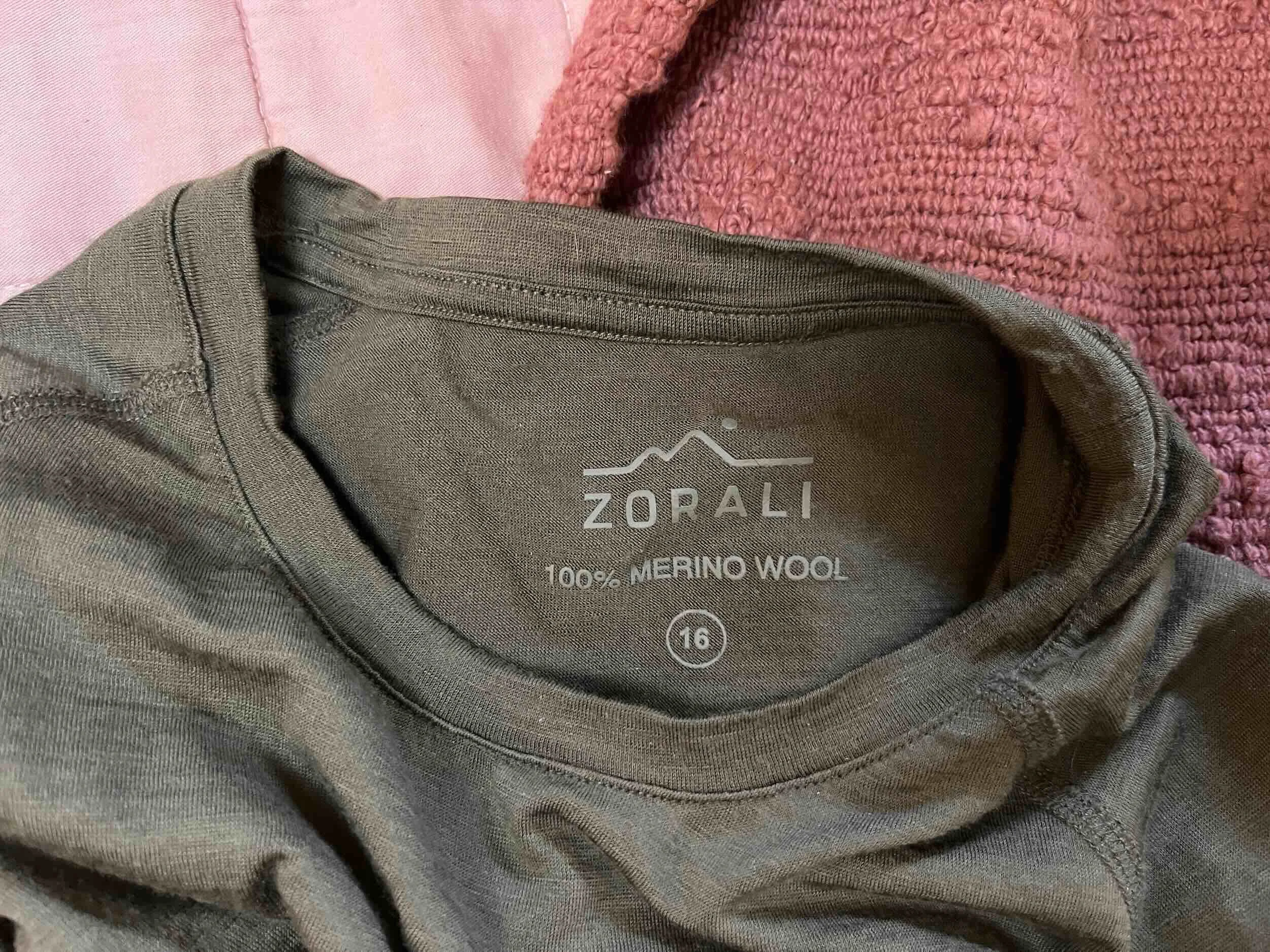
One thing I noticed too is there’s no tag at the back of your neck (something I usually cut off because they itch and/or I walk around all day with my tag sticking up). The size and 100% wool are subtly printed on the fabric instead. Nice.
What to Look for in a Merino Layer for Sailing
If you’re choosing a merino base layer for sailing, I’d look for:
a close but not restrictive fit
enough length to tuck in
no annoying tags or bulky seams
good quality wool that will last
a comfortable neckline (I tend to go for higher necklines for sun protection and warmth)
long sleeve for cold conditions
short sleeve option for milder days
I’d buy as high a quality merino as you can afford, as boat life can be hard on clothing that isn’t well made.
2. Zorali Air-Grid™ Fleece Mid Layer

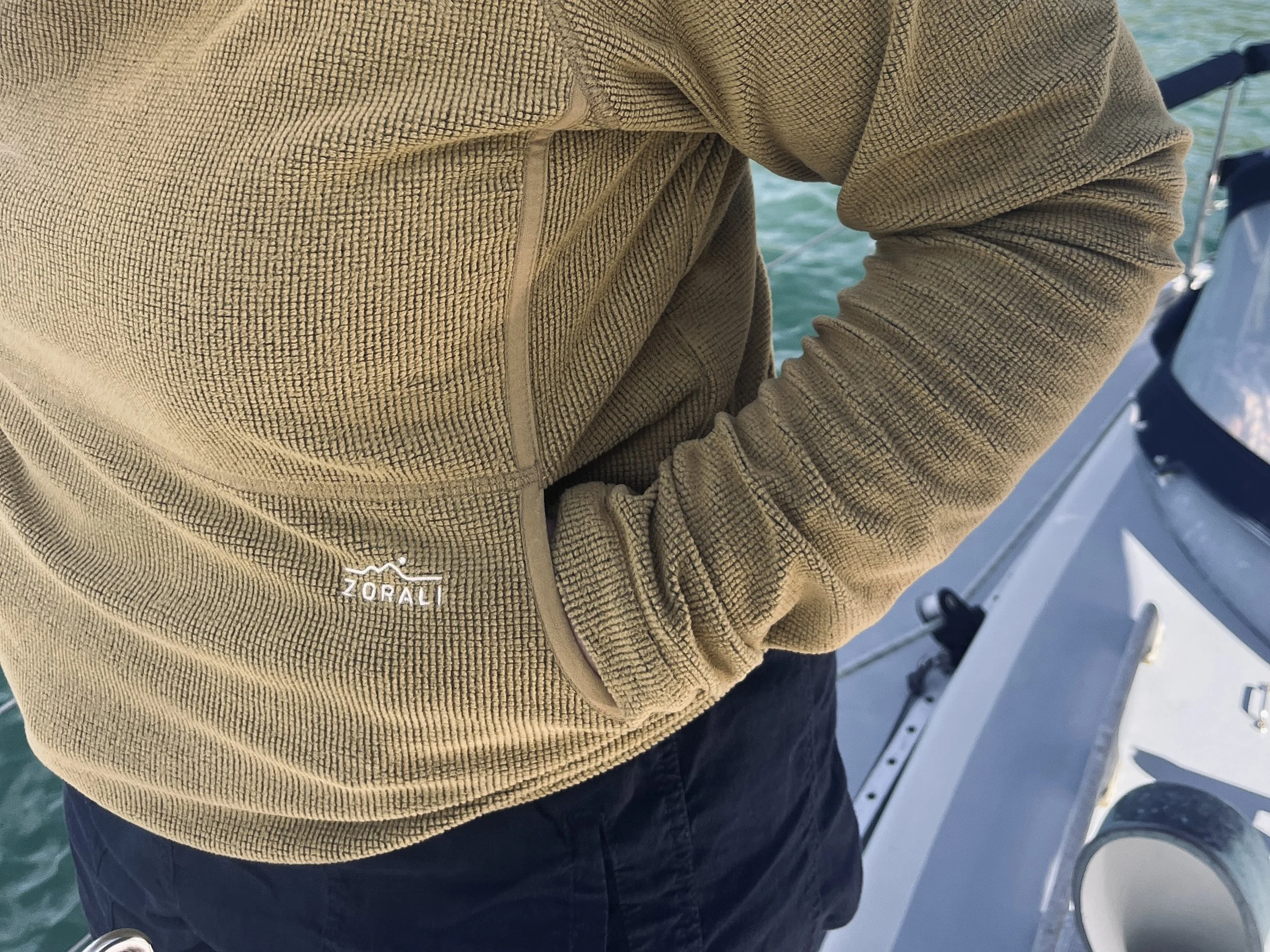
Zorali Airgrid Fleece is lightweight and made from 100% recycled polyester
The fleece brings the cosy factor and does the bulk of the job to keep your body warm.
A good fleece for sailing needs to be warm without being bulky. That sounds obvious, but it’s where a lot of fleeces get annoying.
Too thick and it makes your jacket feel too tight (which doesn’t help if you’re prone to seasickness). And you’ll want to avoid big zips and toggles or you’ll find something annoying pressing into you under your PFD or while leaning over a rail etc.
I’ve been wearing the Zorali Air-Grid Fleece for a couple of years now for hiking and sailing. It’s really light and feels quite thin when you first pick it up, but it’s surprisingly warm. That’s because of the microgrid fleece which traps more heat and breathes better. It packs down super small in a day pack too.
A fleece with a hood is ideal, to keep your ears warm from the wind. The hood on the Air-Grid has good depth which I like, and is cosy around your neck. And I love the kangaroo pouch pocket!

Old mining tunnels — colder than you’d think so decent outdoor clothes like a good fleece are a must-wear

Have been wearing the Airgrid fleece on ourdoor reccys since 2023 and it’s my go-to
What to Look for in a Fleece Layer for Sailing
If you’re choosing a fleece for sailing, look for:
warmth without bulk
breathable fabric
a hood that sits comfortably
minimal hard zips or toggles
no chunky hardware where a PFD will press
enough room to layer over merino
slim enough to fit under a jacket
cuffs that don’t feel tight or annoying
3. Zorali Hotham Thermolite® Jacket Outer Layer

Looking like the cat that got the cream — all cosy onboard in the Zorali Hotham Thermolite Jacket, with it’s nice deep hood
The job of the warm jacket is to insulate you even more than the fleece, and keep the wind out.
For sailing, I don’t always need my warm jacket to be a full technical shell. Sometimes I just want comfort. I want to snuggle into it when I’m talking on the dock, walking to the showers, wedged in my corner of the cockpit, doing a dry dinghy run, or waiting around while my husband says he’ll ‘just quickly’ sort something.
I want soft cuffs. Good pockets. Enough warmth. A hood that makes me feel cosy. And I want it to pack down easily so I can stuff it in a bag without following origami instructions (I struggle with a crane).
Puffer jackets with feathers are lovely if you’re never getting wet.
But boats are damp little ecosystems and there’s always a chance of getting wet.
My go-to outer layer is the Zorali Hotham Thermolite® Jacket. It uses synthetic fill which handles moisture better than down. And I’ve been caught out so many times with changeable weather to know that that’s true. It’s hard to imagine that a jacket that feels so light can be so warm but it really is in my top 10 pieces of outdoor gear.
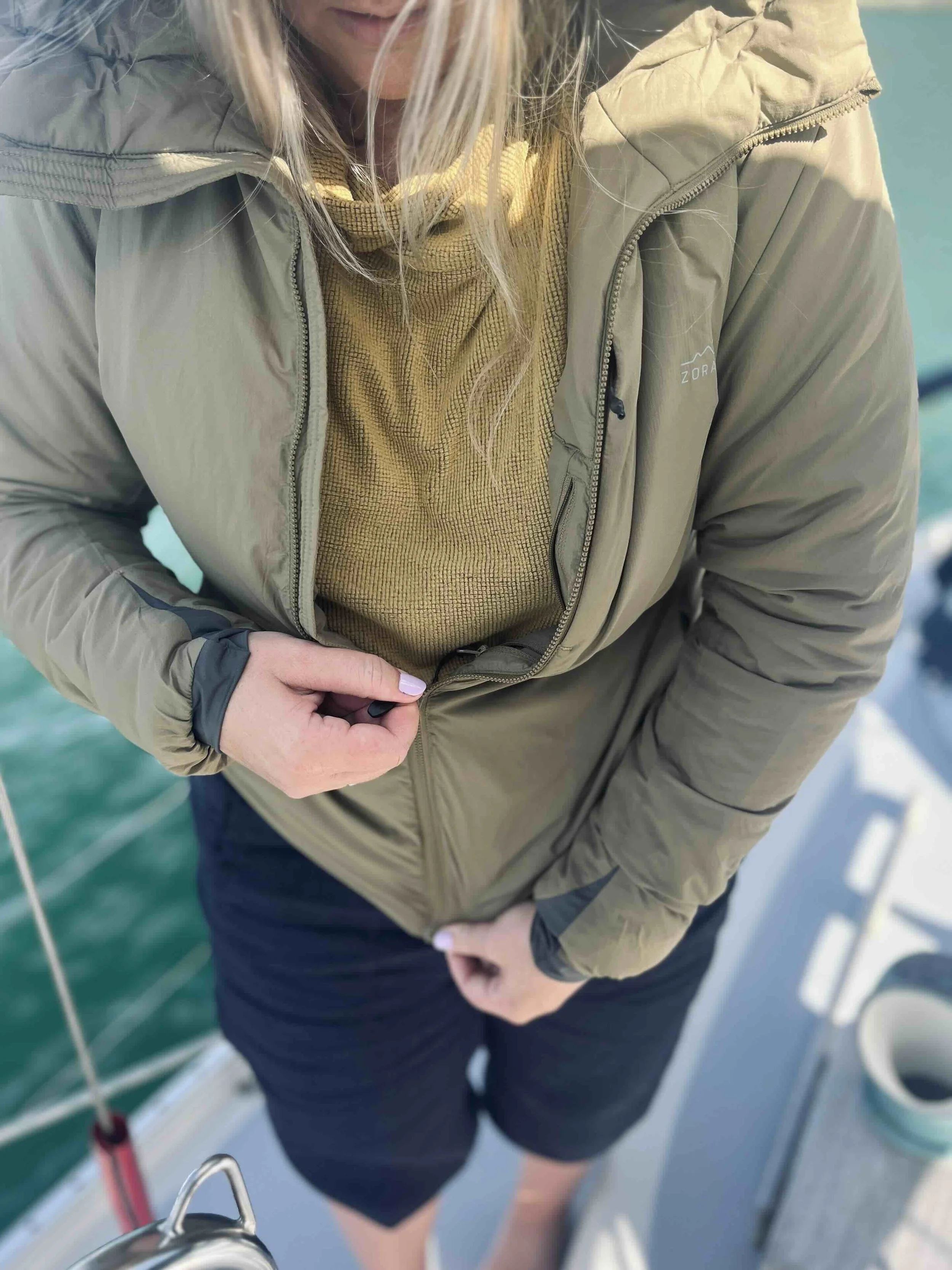
Easy zip to do up (I hate zips I have to fiddle around with to get them started!)
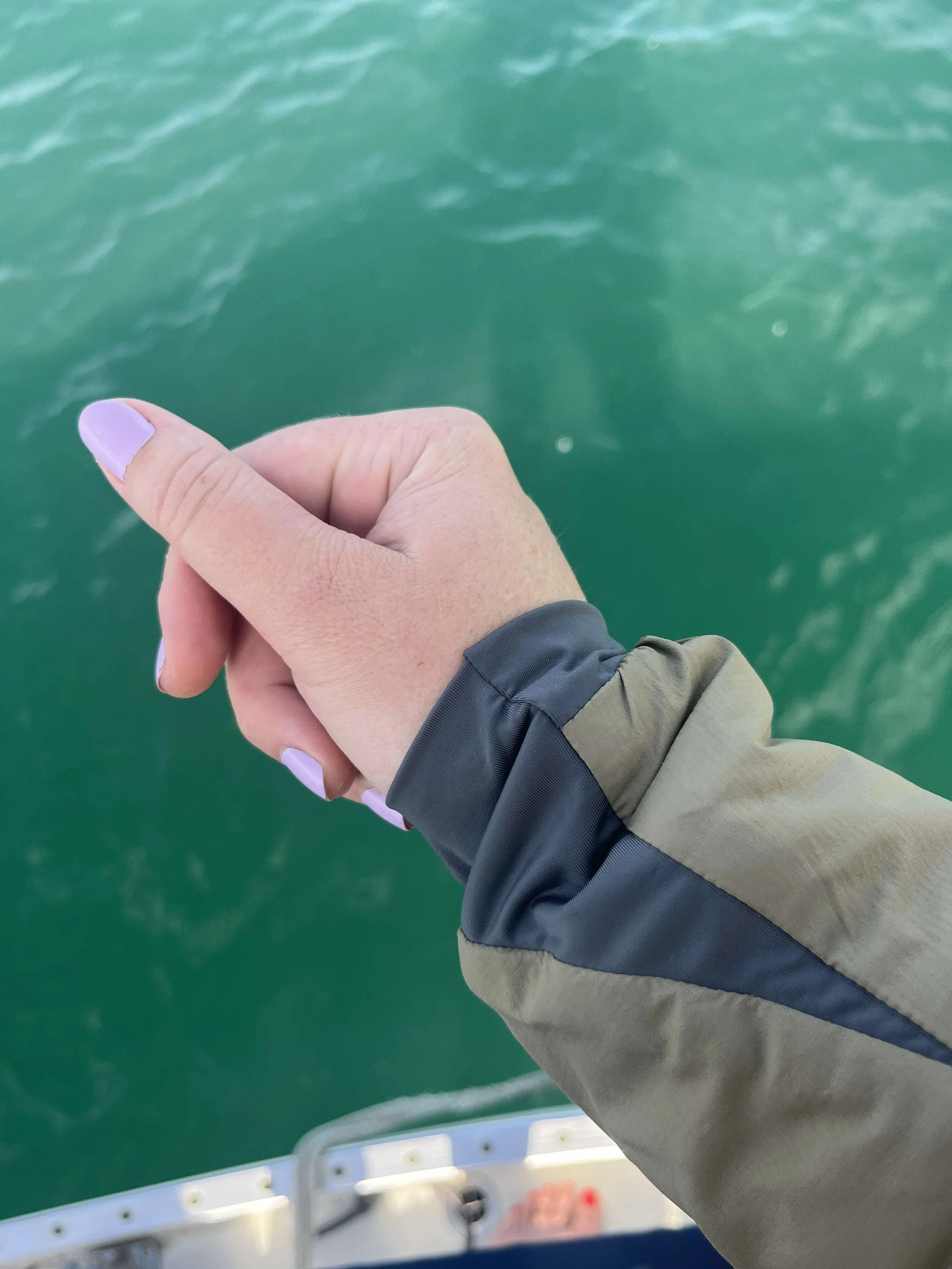
The softest stretchy cuffs never rub and keep the wind out
What to Look for in a Warm Jacket for Sailing
If you’re choosing a warm jacket for sailing, I’d look for:
synthetic insulation rather than down
wind resistance
soft cuffs
useful pockets
a decent hood
easy packability
enough room to wear over a fleece
not too bulky under a shell if needed
This goldilocks layer isn’t replacing a wet-weather jacket — rather it’s the comfy one to keep you warm while the weather’s dry.
In Summary: Why I Keep Coming Back to This Zorali Combo
I’ve worn plenty of different clothing combinations while sailing. I’ve gone with double merino with a wool jersey. I’ve worn a cotton tee under a hoodie and a rain jacket. I’ve worn whatever clothes didn’t smell and were the easiest to reach when I needed it in a hurry.
If you already have good outdoor layers in your wardrobe, start there.
Hiking gear, camping gear, trail layers, wool tops, fleeces, rain jackets — a lot of it can work really well for sailing, especially if you’re using it as your base and mid layers rather than expecting it to replace proper wet-weather gear.
The main thing is to think about how practical it is onboard, and how easy it is to regulate temperature to keep yourself feeling good.
I just know from experience that the Zorali range is soft, warm and comfortable and importantly, really well made — and that all matters for sailing, and enjoyment.
Did you enjoy this article? Share it online and read more on the Journal…